The Abomination of AI – part 2 – the impact of AI

The obvious impact of AI is in the things it does directly.  Some technologies also change the very nature of society, affecting even those who do not use them.  Cars are an obvious example.  AI is also such a technology.

This is the second of a series of blogs based on my keynote “The abomination of AI” at ICoSCI 2026.  Each has an accompanying segment of the video and slides from the talk as well as detailed notes and references.  Section numbers refer to the full report which will be released in the final blog.   The slide thumbnails in the text correspond to the slides in the navigation panel below.  The presentation can be played below, or opened full screen. The full length video, complete slides and further information can be found at: https://alandix.com/academic/talks/ICOSCI-2026-abomination-of-AI/

Previously …

§1.  Every industry is driven by profits and power, but there is something about the nature of AI itself, which interacts with the nature of market forces in the world that is problematic and is different from other technologies.

§2.  Can any technology be neutral?  AI can be used for good purposes, such as advances in healthcare.  It can also have bad outcomes such as bias in the criminal justice system or online exploitative pornography.  Perhaps most often it is creating the frivolous or even ugly.


3.  The Impact of AI

3.1  What AI does

These good, bad and ugly/frivolous things ar what AI does, the direct application of AI in various areas.

When I design an application using AI, I might use it well or I might use it badly.  This is clearly an important issue when we examine our own use of AI and other people’s use of AI, especially if we are involved in developing AI or developing the user interfaces that employ AI or provide AI for other people.


3.2  How AI shapes society
However, with any technology, there’s something that can be more important than what it does.

Some kinds of technology only have an impact where they are used directly.  If I use a nail to connect two pieces of wood, it doesn’t really have a great effect beyond the thing I’m actually constructing.

But some kinds of technology fundamentally reshape the nature of society.  Not every technology does this, but some do, and when this happens, it has a far greater effect than the direct application of the technology in particular areas.

AI is just such a technology.   When you are using AI for a purpose, you might change your mind and choose to use something else.  When society has been changed by AI, everybody, even those who do not choose to use AI at all, are affected by it.  This is happening now.


3.3  How cars have shaped society

Image: By Remi Jouan – Photo taken by Remi Jouan, CC BY-SA 3.0, https://commons.wikimedia.org/w/index.php?curid=7245143

To help us understand this large-scale process, before examining the societal impact of AI itself,  let’s first think about another technology that has fundamentally reshaped society – the car.

There are positive things cars do. It helps you get from A to B, keeps you dry, perhaps gives you a sense of independence.

There are also negative things it does. You might have an accident.  If you are not a law-abiding citizen, you might speed, you might, you might drink alcohol or take drugs and then have accidents and injure other people.

These are things we do as an individual with a car.  You may also be indirectly affected if you don’t have a car, for example if you are a pedestrian involved in a car accident.  However, by and large, these are about things you choose to do.

However, irrespective whether you choose to use cars or not, the whole physical and economic nature of society is shaped by the car and by the internal combustion engine.   Cities have road networks that allow people to get in and out.  This leads to urban sprawl at the edge of the cities along the lines of connection. Because of this organisation, shops and services are placed at car distances away.  So if you don’t have a car (and 84% of the world’s population don’t [MS24].), it becomes difficult to access things.  You find yourself poorer in a sense, more disadvantaged than you would have been because of the actions of other people – car poverty.

Economists talk about externalities, the fact that when I do something, it affects others who aren’t directly doing it [LM02].  The emergence of car poverty is one of the externalities of car use.   Of course there are other externalities like global warming from the petrol engines themselves and pollution [EP19].  Even electric cars produce all sorts of nasty particles from the wear of tyres on the road.

These things are so woven into the fabric of society that is is very hard to break away from them. For example, there have been amazing advances in autonomous vehicles, but really, trying to design a car that drives itself is a bit of a stupid thing to do.  Why not just have, better trains and metros that work far more easily with automation?  But of course, our whole infrastructure is organised around roads and cars.  Therefore, when you want to do something new, you have to fit within it.

This societal structure affects things profoundly, much more than the direct impact.

Coming next …

Part 3 – a different kind of apocalypse
Doomsayers worry about the point when AI becomes sentient, outgrowing its creators.  The real danger is more insidious: the massive financial and human impacts of AI seem almost obscene.

.


References

[EP19]  European Parliament (2019). CO2 emissions from cars: facts and figures (infographics). European Parliament. https://www.europarl.europa.eu/news/en/headlines/society/ 20190313STO31218/co2-emissions-from-cars-facts-and-figures-infographics

[LM02] Stan Liebowitz and Stephen Margolis (2002). Network effects and externalities. In The new Palgrave dictionary of economics and the law. Palgrave Macmillan. pp.1329–1333.

[MS24] Miner, P., Smith, B. M., Jani, A., McNeill, G., & Gathorne-Hardy, A. (2024). Car harm: A global review of automobility’s harm to people and the environment. Journal of Transport Geography, 115, 103817.  https://doi.org/10.1016/j.jtrangeo.2024.103817
 

The Abomination of AI – part 1 – setting the scene

AI can be used for good or bad purposes as well as frivolous time wasting!  However, there are also more large-scale impact of AI as it interacts badly with the processes of the global free market simultaneously amplifying the least satisfactory aspects of the free market and at the same time undermining the fundamental assumptions of of market economics.  The resulting runaway effects pose an existential risk to democracy and human dignity.

This is the first of a series of blogs based on my keynote “The abomination of AI” at ICoSCI 2026.  Each has an accompanying segment of the video and slides from the talk as well as detailed notes and references. Section numbers refer to the full report which will be released in the final blog.   The slide thumbnails in the text correspond to the slides in the navigation panel below.  The presentation can be played below, or opened full screen. The full length video, complete slides and further information can be found at: https://alandix.com/academic/talks/ICOSCI-2026-abomination-of-AI/

AI can be used for tremendous good, not least in medicine, as well as frivolous and dangerous uses, such as exploitative online pornography.  However, it also has large scale structural impacts on the very nature of our world.  The levels of financial investment in AI development and the financial and environmental costs of data centres, can seem obscene, especially as climate change and political instability is threatening to tear down the apparent stability of the late 20th century.  AI has intensified some of the feedback effects of digital technology creating unprecedented emergent monopolies, that leave nations as well as individuals feeling all but powerless.  These are huge issues, and ones that countries, including Malaysia, are struggling to cope with.  However, there are also positive actions we can take as researchers and designers to ameliorate some of the problems and in the process create better and more resilient products that really serve people.

1.  Introduction

The word ‘abomination’ is not widely used, and sounds apocalyptic, often with religious connotations.  Here I’m using it in its broader sense of something that is awful to the point of being at the edge of evil.

And that sounds a very strong thing to say about AI itself.  In fact I’m talking more about the AI industry, but not simply the fact that it is an industry governed by profits and power, that is true of many industries such as oil or plastics.  AI is special.  There is something about the nature of AI itself, which interacts with the nature of market forces in the world that is problematic and is different from other technologies.

I’ve touched upon this issue before in other talks and writing, but this is the first time I’ve focused on it centrally.

1.1  Projects and People

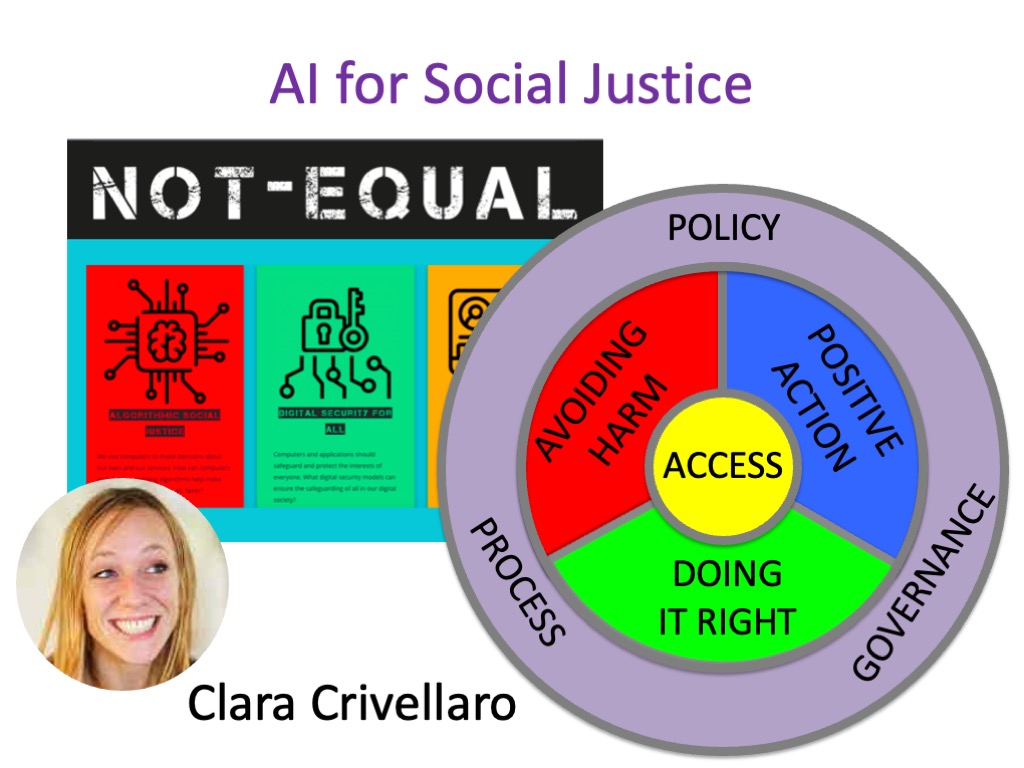
The ideas hare are closely related to two projects, one past, one current.  First is Not-Equal (https://not-equal.tech), which was an EPSRC Network Grant finding a programme of work related to the digital economy and social justice [CC25]; I led the algorithmic social justice strand. Clara Crivellaro, who was the overall project lead, and I are in the process of writing a book on AI for Social Justice [CD27] in the CRC/Taylor&Francis AI for Everything series.  The issues in this talk will form part of one of the chapters in this.

Second is an EU Horizon project TANGO (https://tango-horizon.eu/) investigating human machine decision making.  This is very much looking at the ways in which AI can be used more positively in specific systems and decision making situations, including public policy.  However less about the macro-economic issues in this talk.

2.  Neutral Technology?

There is a myth that technology is neutral.  As researchers, particularly in university, you do your work and come up with new ideas or technology, but how it’s used is up to other people.  It’s up to the politicians; it’s up to industry – not for us to worry about.  This idea of technology neutrality has been heavily critiqued over the years: saying, “we just gave them the guns, we didn’t pull the trigger”, just doesn’t sound convincing!

Of course there is some truth in the neutrality.  Most technologies can be used in good ways or bad ways, but for some technologies, say nerve poisons, there is clearly some aspects that drive it one way rather than another.

The title ‘abomination of AI’ sounds very negative, but at the scale of individual applications of technology, AI is certainly not like nerve poison!  AI can be used in good ways and bad ways, just like pretty much any technology.  So while, this talk is focusing on certain intrinsic dangers of AI, I certainly don’t mean everything about AI is bad, otherwise I wouldn’t be writing textbooks about it.

The dangers I’ll be highlighting are at a macroeconomic scale, and are pretty negative, so after discussing these we’ll return to some of the constructive things that you can do within your discipline or work to help ameliorate some of the bad things.

Before that, let’s look at the smaller scale of individual applications of AI, good, bad and …


2.1  The Good – health and UX

Images: [NF24],  CSBIOPASSION, CC BY-SA 4.0
<https://creativecommons.org/licenses/by-sa/4.0>, via Wikimedia Commons.  https://commons.wikimedia.org/wiki/File:C12orf29_AlphaFold.png

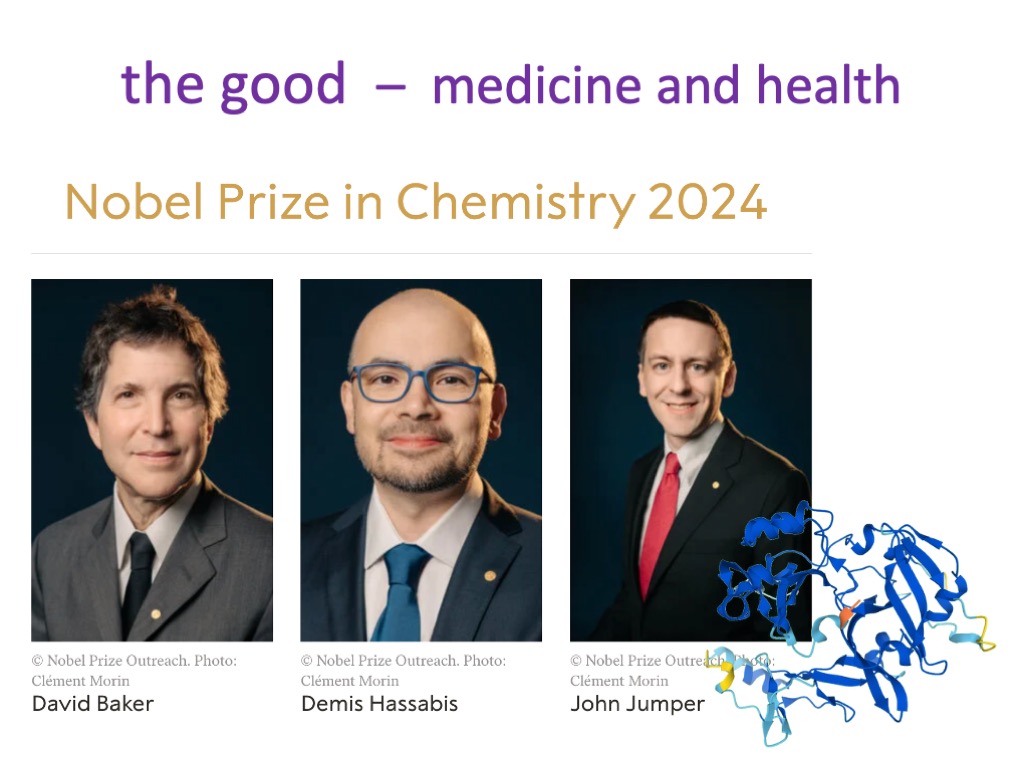
There are clearly some wonderful things being achieved with AI, not least some of the amazing advances in medicine and health that have been happening because of AI.  You may recall the 2024 Nobel Prize for chemistry was shared between a chemist and two AI researchers [NF24]; the latter for their role in developing AlphaFold which has revolutionised protein synthesis  [JE21].

Closer to home, in my book AI for HCI  [Dx26b] I look at the ways AI can help in user interface design and creating better computer systems for people


2.2  The Bad

Bias and discrimination

Paper: [Dx92]

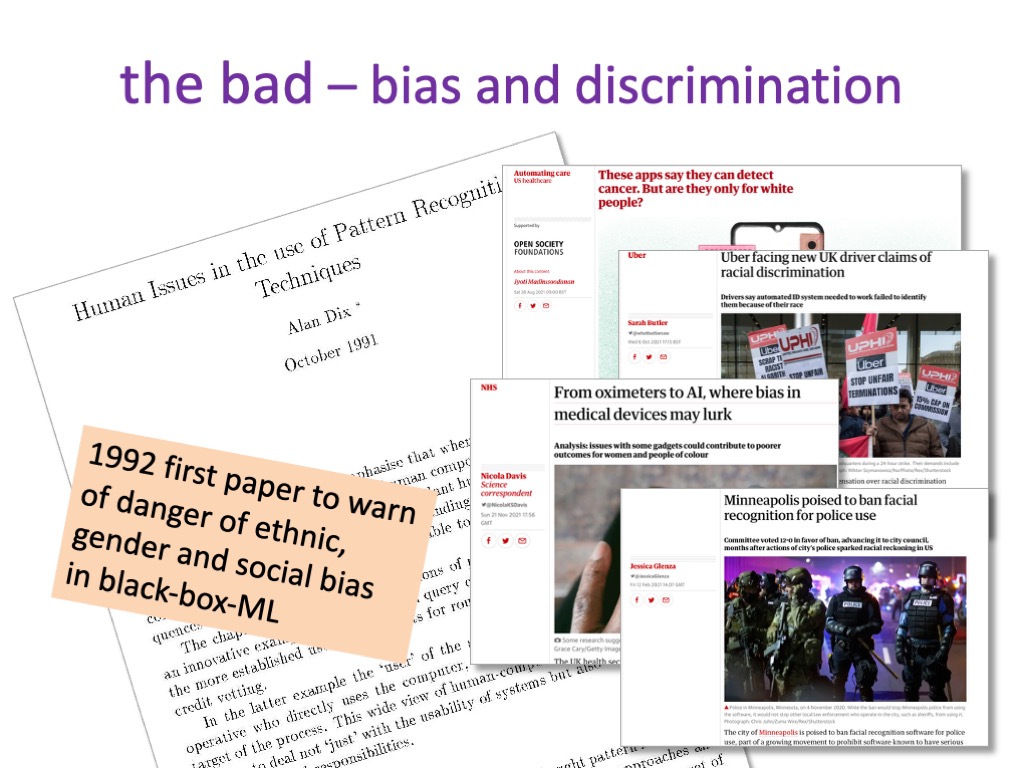
Back in 1992, I first wrote about the dangers of ethnic, gender and social bias in particular in black box machine learning algorithms [Dx92].  To be honest, at that point, I thought it was going become a real issue in the next few years.  However, that was just before the big AI winter, so in fact, it got put off for 25 years or so.

Paper: [Dx92] Images: [Da21,Gl21,Ma21,Bu21]

But now, of course,  bias is a really critical issue often in the press, including problems with facial recognition systems : [Da21,Gl21,Ma21,Bu21].  In the US court system there is extensive controversy about the use of systems that recommend whether you give people parole or not [AL16,LM16].


Online exploitative pornography

Images: [CH26,MC26]

Another issue that has been hot in the press is the use of online platforms to produce exploitative pornography using AI.  While the UK was still wringing its hands deciding what to do, Malaysia and Indonesia led the world banning Grok [CH26,MC26].  Even for a country, standing up to industries as big as X and Elon Musk is no small thing. In fact Musk did partially backtracked on Grok, and while still limited, it does show that the global steamroller of AI is not inevitable.


2.3  The Ugly … or simply frivolous

Image: [Wa24]

So there are some really good uses of AI and some bad ones, but for the general public, the majority, while not always ugly are at best frivolous.  The world is filled with images of cats on skateboards, cats dancing, albeit not all as ugly as the Chubby TikTok craze [Wa24]!  You have almost certainly seen some AI generated cat images or videos, and they are often quite sweet, like cartoons emphasising the things we find appealing – large-eyed cuddly pets doing cute things.

This is not bad, it’s just frivolous.  Of course, frivolous can be good; indeed fun is important for a full life and has been studied in human-computer interaction (HCI) [BM18] including my own work on Christmas Crackers [Dx18]. We pay to go to the circus, watch a comedy film or buy a toy for a child.  But maybe there is a point when the sheer volume and cost of frivolity is excessive?

Coming next …

Part 2 – the impact of AI

The obvious impact of AI is in the things it does directly.  Some technologies also change the very nature of society, affecting even those who do not use them.  Cars are an obvious example.  AI is such a technology.


References

[AL16] Angwin, J., Larson, J., Mattu, S. and Kirchner, L. (2016). Machine bias there’s software used across the country to predict future criminals: And it’s biased against blacks. ProPublica (23 May 2016). https://www.propublica.org/article/machine-bias-risk-assessments-incriminal-sentencing.

[BM18] Mark Blythe and Andrew Monk (2018).  Funology 2: Critique, ideation and directions.” Funology 2: From Usability to Enjoyment. Cham: Springer.

[Bu21] Sarah Butler (2021). Uber facing new UK driver claims of racial discrimination. The Guardian, 6 Oct 2021. https://www.theguardian.com/technology/2021/oct/06/uber-facing-new-uk-driver-claims-of-racial-discrimination

[CH26] Osmond Chia and Silvano Hajid (2026). Malaysia and Indonesia block Musk’s Grok over explicit deepfakes. BBC News. 12 January 2026. https://www.bbc.co.uk/news/articles/cg7y10xm4x2o

[CC25] Clara Crivellaros, Lizzie Coles-Kemp, Alan Dix, and Ann Light (2025). Co-creating conditions for social justice in digital societies: modes of resistance in HCI collaborative endeavors and evolving socio-technical landscapes. ACM Transactions on Computer-Human Interaction. Vol. 32(2), Article No:15, pp.1–40  https://doi.org/10.1145/3711840

[CD27] Clara Crivellaro and Alan Dix [2027]. AI for Social Justice. CRC Press, in preparation. https://alandix.com/ai4sj/

[Da21] Nicola Davis (2021).  From oximeters to AI, where bias in medical devices may lurk. The Guardian, 21 Nov 2021. https://www.theguardian.com/society/2021/nov/21/from-oximeters-to-ai-where-bias-in-medical-devices-may-lurk

[Dx92] A. Dix (1992).  Human issues in the use of pattern recognition techniques. In Neural Networks and Pattern Recognition in Human Computer Interaction Eds. R. Beale and J. Finlay. Ellis Horwood. 429-451.  https://alandix.com/academic/papers/neuro92/

[Dx18] A. Dix (2018). Deconstructing Experience: Pulling Crackers Apart. In: Blythe, M., Monk, A. (eds) Funology 2. Human–Computer Interaction Series. Springer, Cham. https://doi.org/10.1007/978-3-319-68213-6_29

[Dx26b] A. Dix. (2026). AI for Human–Computer Interaction. CRC Press. (in press). https://alandix.com/ai4hci/

[Gl21] Jessica Glenza (2021). Minneapolis poised to ban facial recognition for police use. The Guardian, 12 Feb 2021. https://www.theguardian.com/us-news/2021/feb/12/minneapolis-police-facial-recognition-software

[JE21]  Jumper, J., Evans, R., et al. Highly accurate protein structure prediction with AlphaFold. Nature 596, 583–589 (2021). https://doi.org/10.1038/s41586-021-03819-2

[LM16] Larson, J., Mattu, S., Kirchner, L. and Angwin, J. (2016). How we analyzed the COMPAS recidivism algorithm. ProPublica, 23 May 2016. https://www.propublica.org/article/how-weanalyzed-the-compas-recidivism-algorithm

[Ma21] Jyoti Madhusoodanan (2021). These apps say they can detect cancer. But are they only for white people?  The Guardian,  28 Aug 2021. https://www.theguardian.com/us-news/2021/aug/28/ai-apps-skin-cancer-algorithms-darker

[MC26] Liv McMahon and Laura Cress (2026). X could face UK ban over deepfakes, minister says. BBC News 9 January 2026. https://www.bbc.co.uk/news/articles/c99kn52nx9do

[NF24]  The Nobel Foundation (2024). The Nobel Prize in Chemistry 2024. NobelPrize.org. Nobel Prize Outreach 2025. Sat. 17 May 2025.  https://www.nobelprize.org/prizes/chemistry/2024/summary/

[Wa24] Aidan Walker (2024). The unstoppable rise of Chubby: Why TikTok’s AI-generated cat could be the future of the internet. BBC, 20th August 2024.  https://www.bbc.co.uk/future/article/20240819-why-these-ai-cat-videos-may-be-the-internets-future


Personal data sovereignty — anonymisation and aggregation is not enough

Data that has been anonymised and aggregated it is often regarded as safe and outside privacy laws, but as todays news shows this is not the case, it can still violate personal data sovereignty.

In 1990 when I first wrote about privacy in “Information processing, context and privacy.” I gave various invented scenarios demonstrating how information that was totally anonymised and aggregated still led to problems.

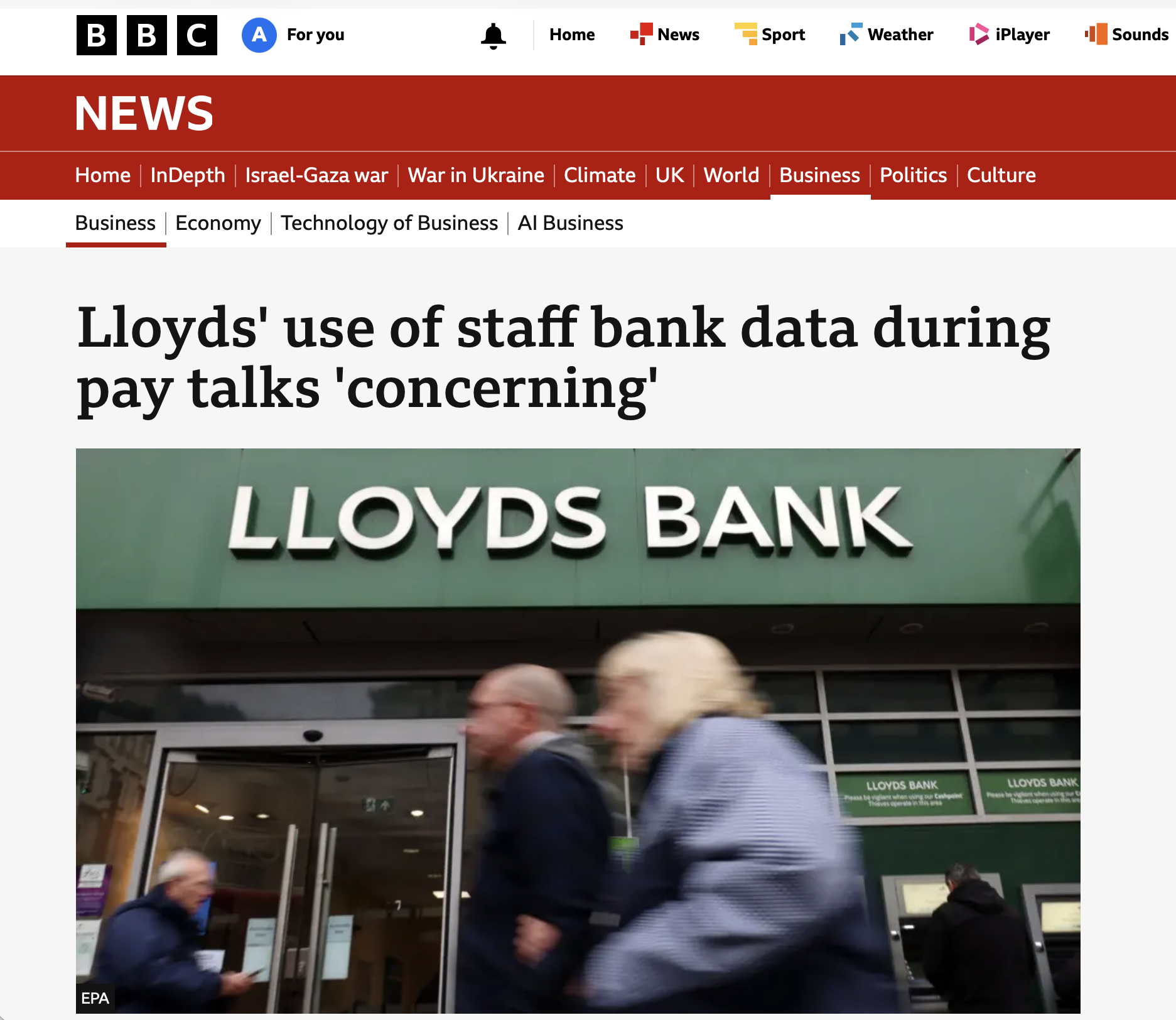
Today’s BBC news article today shows that, thirty-five years on, this is very much a live issue!  During pay negotiations, Lloyds Bank used its access to its own employees’ bank accounts to compare them with other customers to argue that the employees are doing well financially.

The data used by the bank was totally anonymised and aggregated before comparison, and a bank customer expects that such reports will be generated by the bank as part of its financial activities.  However, many Lloyds customer, and especially those that are also their employees, would not be happy for their data to be used to exert leverage over its employees in this way.  No personal data has been leaked or used, so this does not violate the Data Protection Act or similar legislation.  And yet it feels like an invasion of something akin to privacy.

Back in 1990 I regarded this as a wider form of privacy, but more recently I’ve been using the term personal data sovereignty for this notion that we might care about the way our data is used.and have a moral right to be able to know about, understand and deny uses to which we disapprove.

I may be happy for a social media platform to store my photograph and show it on other people’s feeds.  I might also be happy for them to use my photo to train a neural network that is then used to identify faces in images.  Distributed over the billions of weights in the neural network, my own image is lost amongst a myriad of other photos — totally anonymous and aggregated, so no direct privacy risk.  However, I might not be happy if that neural work is subsequently used in military drones to target people or implement mass government surveillance.

It is not sufficient to focus on bare privacy; massive computation of big data means that many socially and ethically challenging issues require us to look wider at personal data sovereignty.


another year another Tiree Ultra

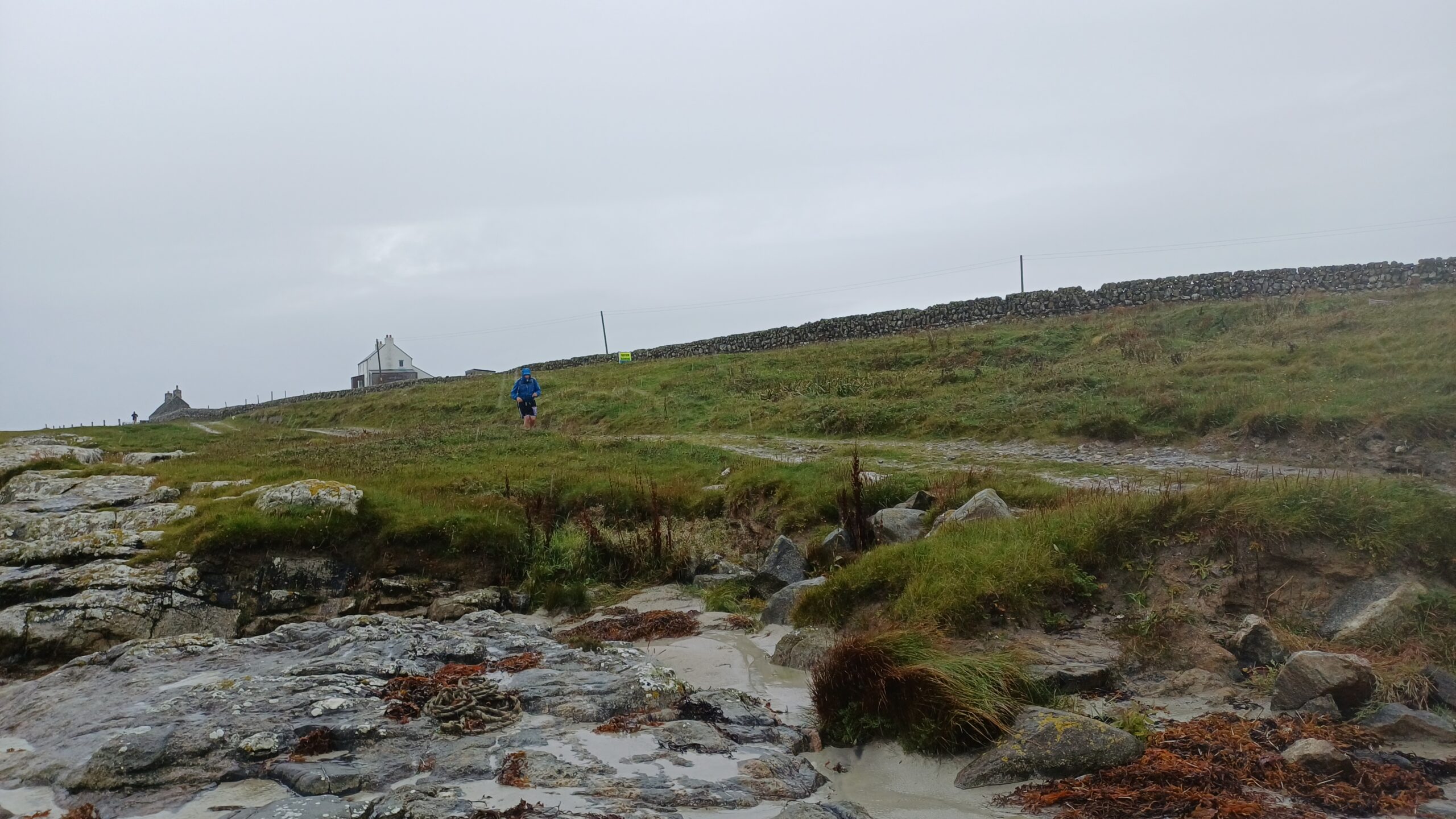
Finished 2025 Tiree Ultramarathon and the toughest weather yet, 50mph (80kph) winds at some points of the day and wind flung hail that stung every bit of exposed flesh.  However the spirit of the day, as ever, was wonderful and everyone seemed to enjoy themselves despite (maybe because) of the challenging weather.

Many thanks to all of the marshals, those at the registration desk, at the checkpoints, and shouting encouragement on the way.  But of course special thanks to the hero of the day Will Wright for organising, yet again, such an amazing event.

I usually do a mix of running and walking, but this year I pretty much ran every mile with the exceptions of the clambery bits where you pick your way through bog or over slippery stones … and a section on the west of the island.   With wind full in our faces, I realised that my goal of running continuously was a little foolish as the woman a hundred years ahead walked faster than I was running.  I realised it was futile when I quite literally found myself running in the spot – with each step the forward speed was immediately canclled by the wind blowing me back.

I’m sure my general preparedness was helped by my 65-for-65 run in July.  I had also been a little more methodical with food during the first day of it especially, and tried to do that today – mostly Tailwind in my water bladder and Kendal mint cake to nibble every mile or so.  I was tired and sore by the end, but didn’t have any of the energy crashes I often get part way through the course.


Retiring today!

Today is my last day at Cardiff Met.  I retired from Swansea University just over a year ago, and continued my part-time position at Cardiff Met at that point, but now I am completing my retirement.  I will continue to be emeritus professor at both Swansea and Cardiff Met, so I’m not turning my back on academia; indeed I’ve got a second edition of “Introduction to Artificial Intelligence” due out in June and I’m part way through several other books, so I won’t be idle.  However, it is a change of pace and focus.

To mark my retirement and also turning 65 in July I am running 65 miles in a week in aid of Cancer Research UK.  Read more about this at 65 for 65.

It has a been a joy working with everyone at Cardiff Met for the past three years.  I’ve been part of the central Research and Innovation Services where I’ve sometimes described myself as a ‘professor without portfolio’ and that my job was to ‘talk to anyone, anywhere, about anything’.  Although slightly tongue in cheek, the latter has been largely true, spending time with researchers and academics in areas from creative writing to bacterial infection.  So many wonderful people each with a vision to make a difference in the world.

My academic connections with Cardiff Met go back to the mid 2000s when I started to collaborate with Steve Gill and others in product design and I’d been a visiting professor in the Cardiff School of Art and Design since 2013.  However, the roots reach much further back.

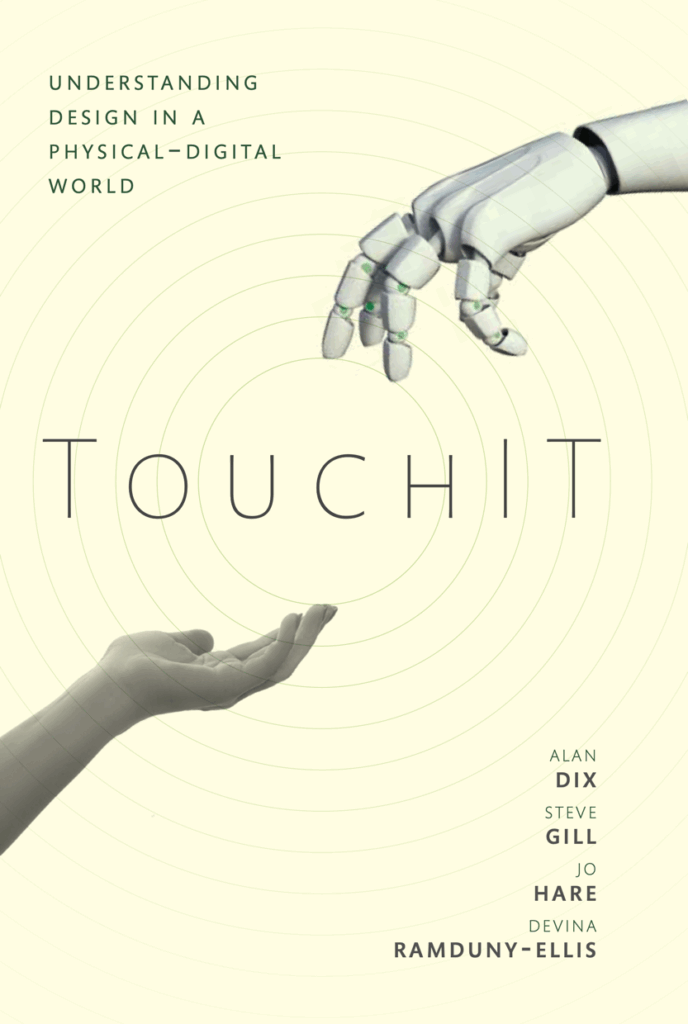
TouchIT front cover

TouchIT: Understanding Design
in a Physical-Digital World
A. Dix, S. Gill, D. Ramduny-Ellis & J Hare

Public Lecture.
Treading-Out Technology
Visiting Professor Alan Dix

When I was in Sixth Form at Howardian Comprehensive School (now closed and demolished), once a week, every Friday afternoon, a friend and I used to walk several miles across Cardiff to the FE college on Western Avenue to study for a computing A Level … the FE College that many years later became the Llandaff Campus of Cardiff Metropolitan University.

Llandaff Technical College opened in December 1954.

According to a BBC article the first computing A Level exams were in 1971, but even in 1976–78 it was still a new subject and not one the school could teach.  I don’t recall the name of the lecturer, who I’m guessing was fresh out of university and found the A Level gave him some creative room compared with the City and Guilds courses that were the staple of the college.  This was in the days before the crazy gulf we see now between more theoretical and practical aspects of the subject.  Each week was something different, from the innards of machines to application areas, the halting problem and even an afternoon of COBOL programming.  Indeed we covered more programming languages in those couple of hours a week than are common in degree courses today.  My own coursework project was writing a bootstrap compiler.

Crucially the A Level gave me access to the FE College library and in particular maths books, many of the “X for engineers” style, which are usually so much better written than the equivalent ones aimed at mathematicians!  This was invaluable when I later went on to sit the Cambridge maths entrance exam, won a scholarship and was then contacted by the British Maths Olympiad organisers, which led to being part of the UK Team at the International Mathematical Olympiad in Bucharest, my first time out of the country.

And it all started in the buildings that I have been working in for the past few years.

Infant intimations of infinite regress

Can chance childhood thoughts shape a whole life? Maybe a lifetime studying the nuanced complexity of humanity alongside the elusive simplicity of mathematics comes down to The Woodentops.

I’m guessing I was four or five. The Woodentops was an early BBC children’s TV series, which featured a family of (wooden) puppets and their dog Spotty.  It aired alongside other favourites such as “Tales of the River Bank” and “Bill and Ben the Flowerpot Men” in the Listen with Mother slot just after lunch time (we called it dinner then), when pre-school children were at home.

One day the Woodentops’ parents went out for the day leaving the children and Spotty to look after themselves (in the days before social services would forbid this).  The childen had many adventures … all within a quarter of an hour episode.

Towards the end of the episode the parents came back and asked the children about their day.The eldest recounted the events, “we did this, and then that, and then something else, then you came back and then it was now.”

“… and then it was now” … my young brain recoiled. No it wasn’t ‘now’, because then you told them about the day … but no if you had told them that it still wouldn’t be now, because you’d then have to tell them about telling them …

At that point, faced with the infinite regress, my infant reasoning gave out.

Many years later I learnt about infinite series in mathematics, recursive functions in programming, and of course Zeno’s paradox, but each merely added to that heady mix of confusion and wonder as a child.  Years later, that Woodentops episode still speaks to me about the amazing complexity of everyday things and the need to accept the limits of understanding as well as probing those limits deeply.

I am not alone in this wonder as is evident from the general fascination with fractal patterns like the Mandelbrot set, and Russell Hoban’s  last visible dog in “The Mouse and His Child“.


Maybe this early experience also led to a lifetime’s fascination with time itself, and the elusive nature of ‘now’.

In The Woodentops episode, unlike Achilles and the tortoise in Zeno’s fable, there is no second runner except time itself, the past rushing headlong and relentless, but never catching the ever receding present.


… and if you would like to expand your cultural and philosophic horizons … here are a couple of Woodentops episodes on YouTube:

Query-by-Browsing has user explanations

Query-by-Browsing now has ‘user explanations’, ways for users to tell the machine learning component which features are significant in the user provided examples.  As promised in my blog about local AI explanations in QbB a few weeks ago, this version of QbB is released to coincide with our paper “Talking Back: human input and explanations to interactive AI systems” that Tommaso Turchi is presenting at the Workshop on Adaptive eXplainable AI (AXAI) at IUI 2025 in Cagliari, Italy,

As part of the EU Horizon Tango project, on hybrid human–AI decision making, we have been thinking about what it would mean for users to provide the AI with explanations of their human reasoning in order to guide machine learning and improve the AI’s explanations of its outputs.

As an exemplar of this I have modified QbB to include forms of user explanation.  These are of two kinds, global user explanations to guide the overall machine learning and local user explanations focused on individual examples.

Play with this version of QbB or see the QbB documentation in Alan Labs.

Basic operation

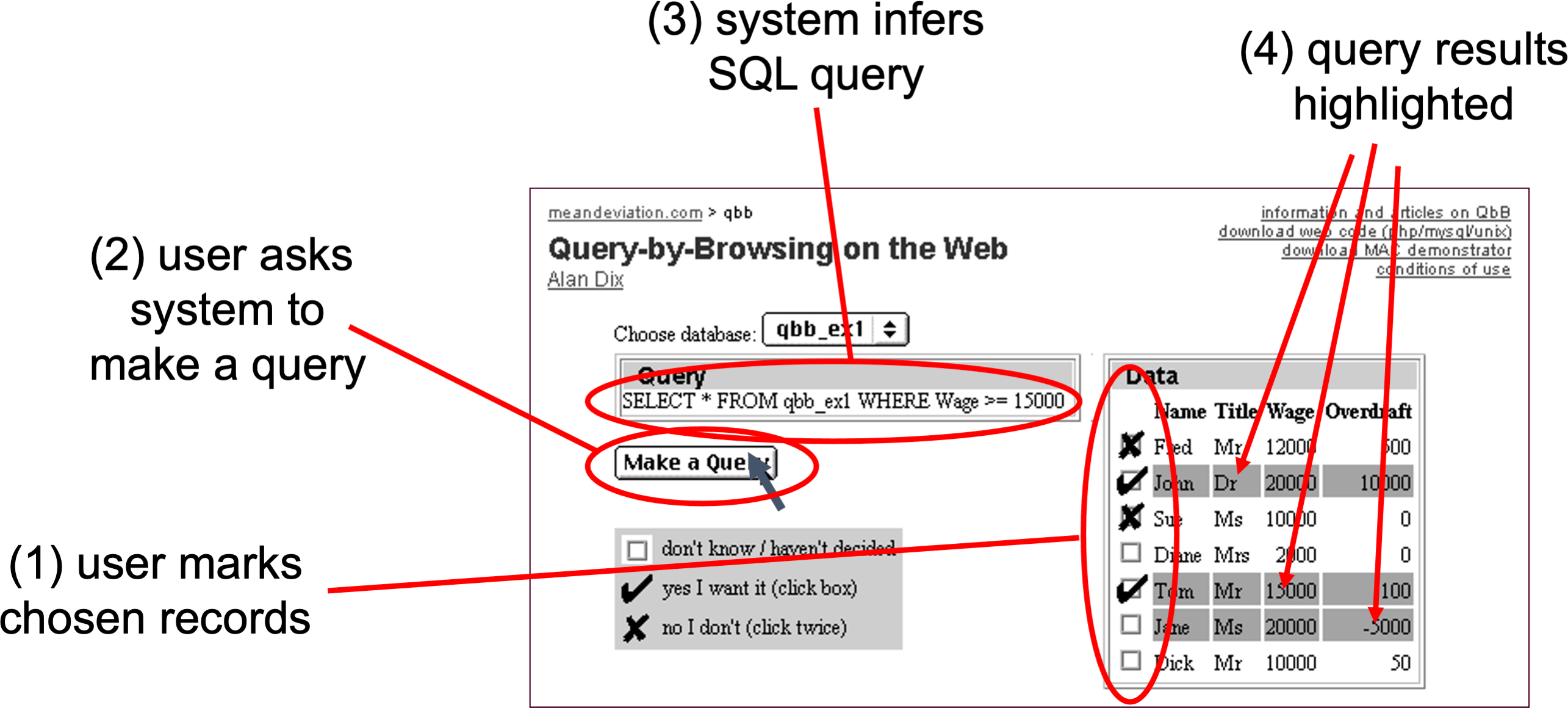
Initially you use QbB as normal: you select examples of records you do and don’t want included and the system infers a query using a variant of ID3 that can be presented as a decision tree or an SQL query.

Global user guidance

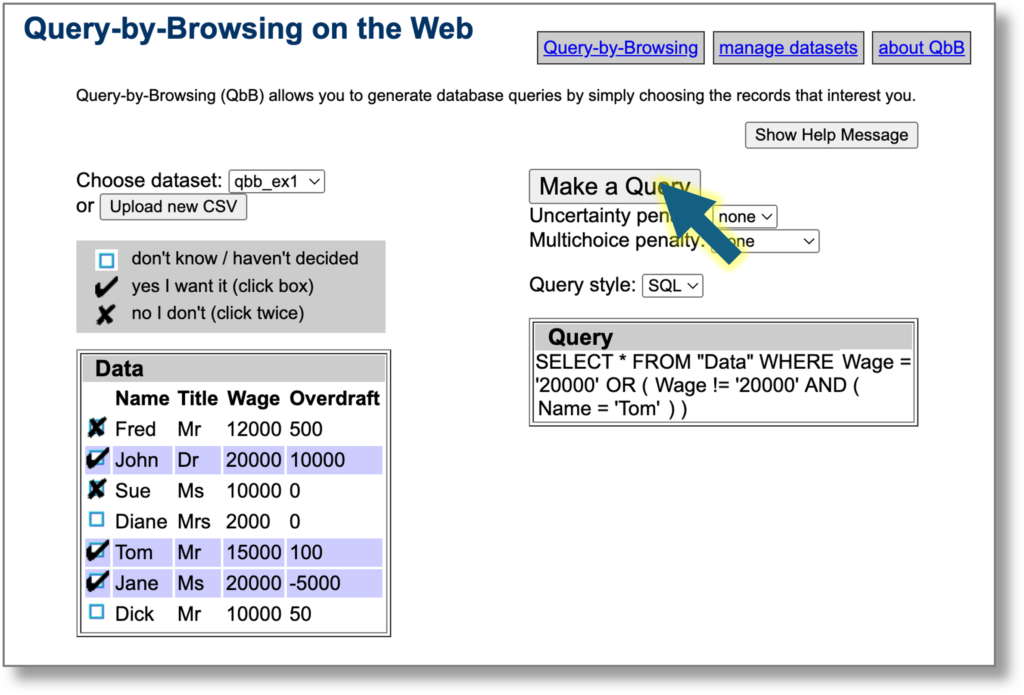
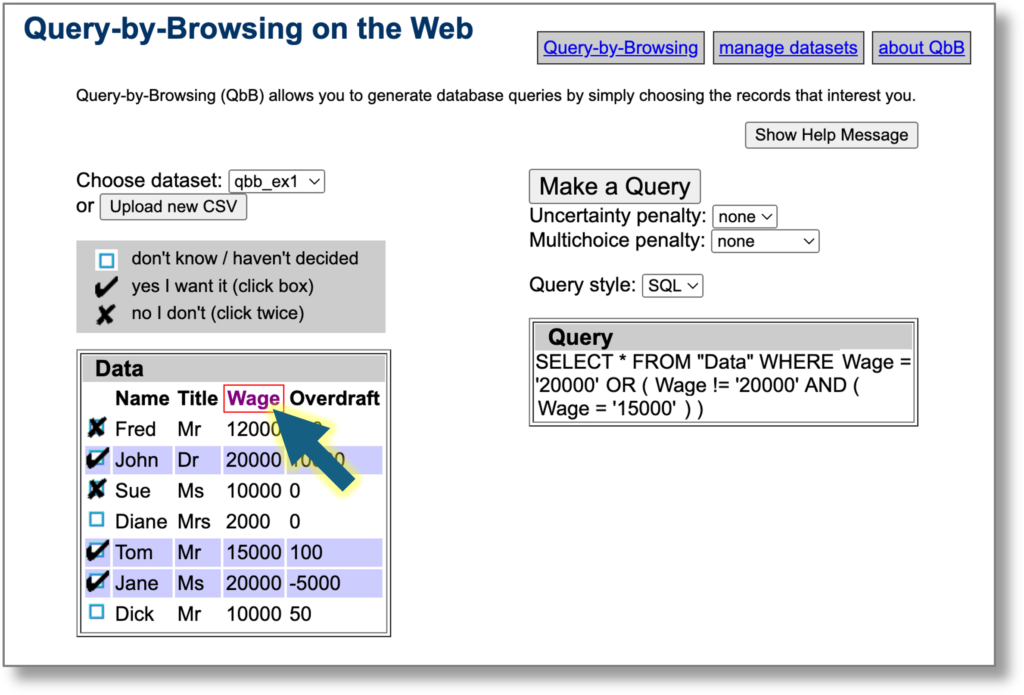
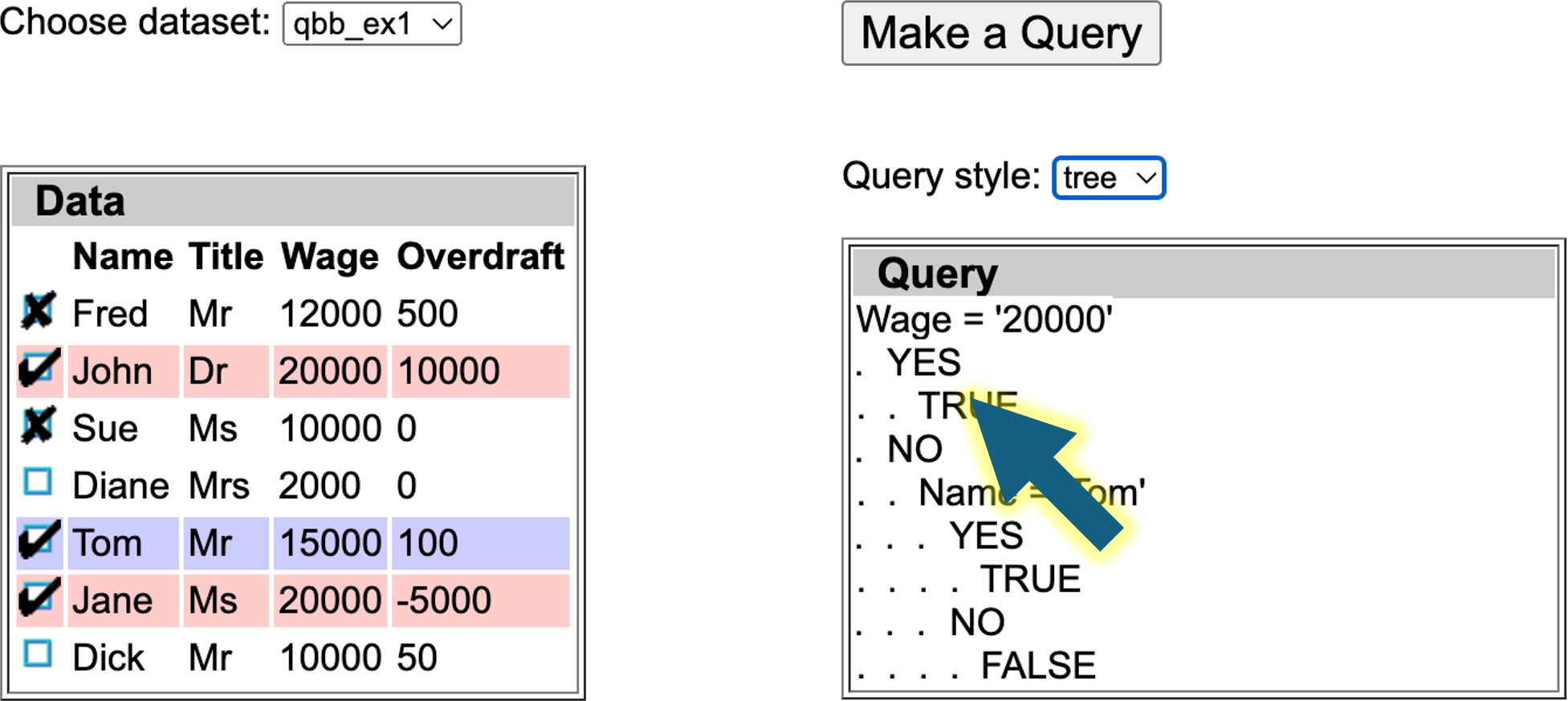
At any point you can click row headers to toggle between important (red border), ignore (grey) or standard.  The query refreshes taking into account these preferences .  Columns marked ‘ignore’ are not used at all by the machine learning, whereas those marked as ‘important’ are given preference when it creates the query.

In the screenshot below the Wage column is marked as important.  Compare this to the previous image where the name ‘Tom’ was used in the query.


Local user explanations

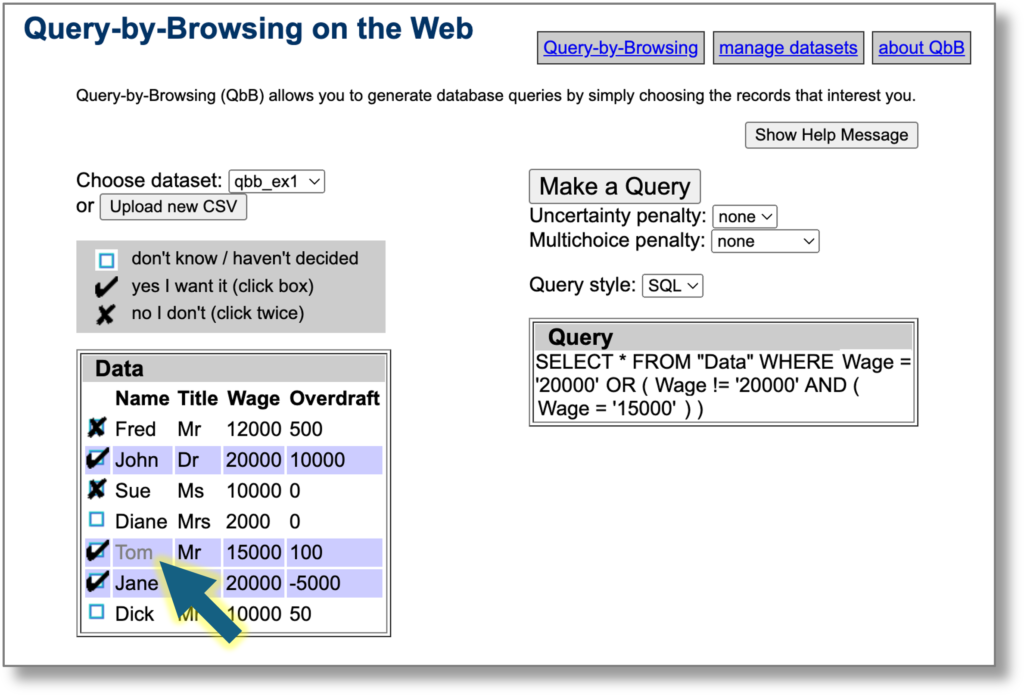
In addition you can click data cells in individual rows to toggle between important (red border), not important (grey) or standard.  This means that for this particular example the relevant field is more or less important.  Note that is a local explanation, just because a field is important for this record selection, it does not mean it is important for them all.

See below the same example with the column headers all equally important, but the cell with contents ‘Tom’ annotated as unimportant (grey).  The generated query does not use this value.  However, note that while the algorithm does its best to follow the preferences, it may not always be able to do so.


Under the hood

Query-by-Browsing uses a modified version of Quinlan’s ID3 decision tree induction algorithm, which has been one of the early and enduring examples of practical machine learning.  The variant used in previous versoins of QbB includes cross-column comparisons (such as ‘outgoings>income‘), but otherwise use the same information-entropy-based procedure to build the decision tree top down.

The modified version to take into account global user guidances and local user explanations still follows the top-down approach.

For the global column-based selections, the ‘ignore’ columns are not included at all and the entropy-score of the ‘important’ columns are multiplied by a weighting to make the algorithm more likely to select decisions based on these columns.  Currently this is a fixed scaling factor, but could be made variable to allow levels of importance to be added to columns.

For the local user explanations, a similar process is used except: (a) the columns for unimportant cells are scaled-down to make them less likely to be chosen rather than forbidden entirely; (b) the scaling up/down for the columns of important/unimportant cells depends on the proportion of labelled cells below the current node.  This means that the local explanation makes little difference in the higher-level nodes, where an individual cell is one amongst many unless several have similar cell-level labels, however, as one comes closer to the nodes that drive the decision for a particular annotated record its cell labelings become more significant.

Note that this is a relatively simple modification of the current algorithm.  One of the things we point out in the ‘talking back‘ paper is that user explanations open up a wide range of challenges in both user interfaces and fundamental algorithms.


AI Book glossary complete!

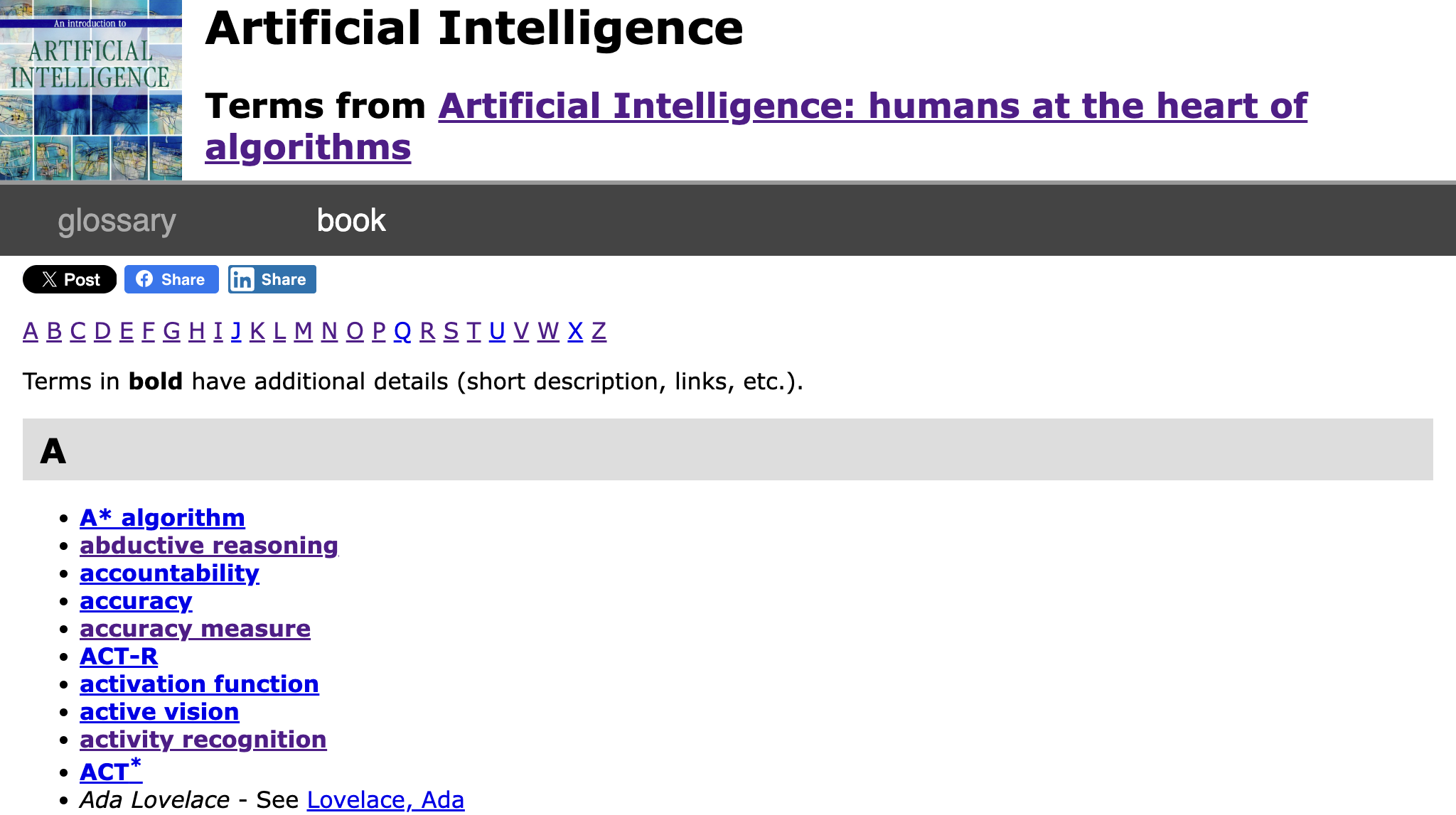
The glossary is complete –1229 entries in all.  All ready for the publication of the AI book in June.  The AI glossary is a resource in its own right and interlinks with the book as a hybrid digital/physical media. Read on to find more about the glossary and how it was made.

When I wrote my earlier book Statistics for HCI: Making Sense of Quantitative Data back in 2000, I created an online statistics glossary for that with 357 entries … maybe the result of too much time during lockdown?  In the paper version each term was formatted with a subtle highlight colour and in the PDF version they are all live links to the glossary.

So, when I started this second edition of Artificial Intelligence: Humans at the Heart of Algorithms I thought I should do the same, but the scale is somewhat different with more than three times as many entries.  The book is due to be published in June and you can preorder at the publisher’s site, but the glossary is live now for you to use.

What’s in the AI Glossary

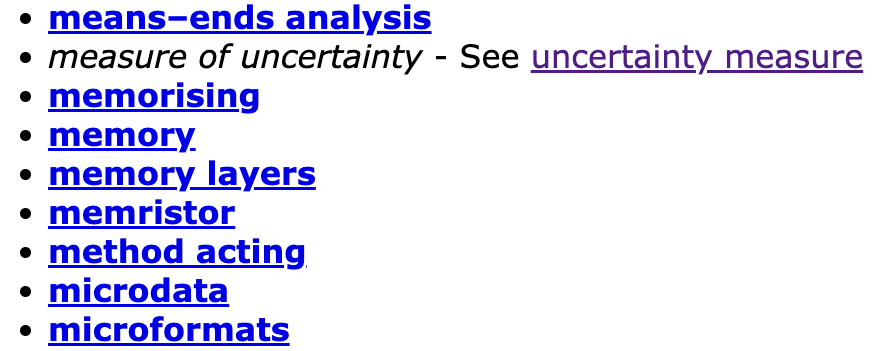
The current AI Book glossary front page is a simple alphabetical list

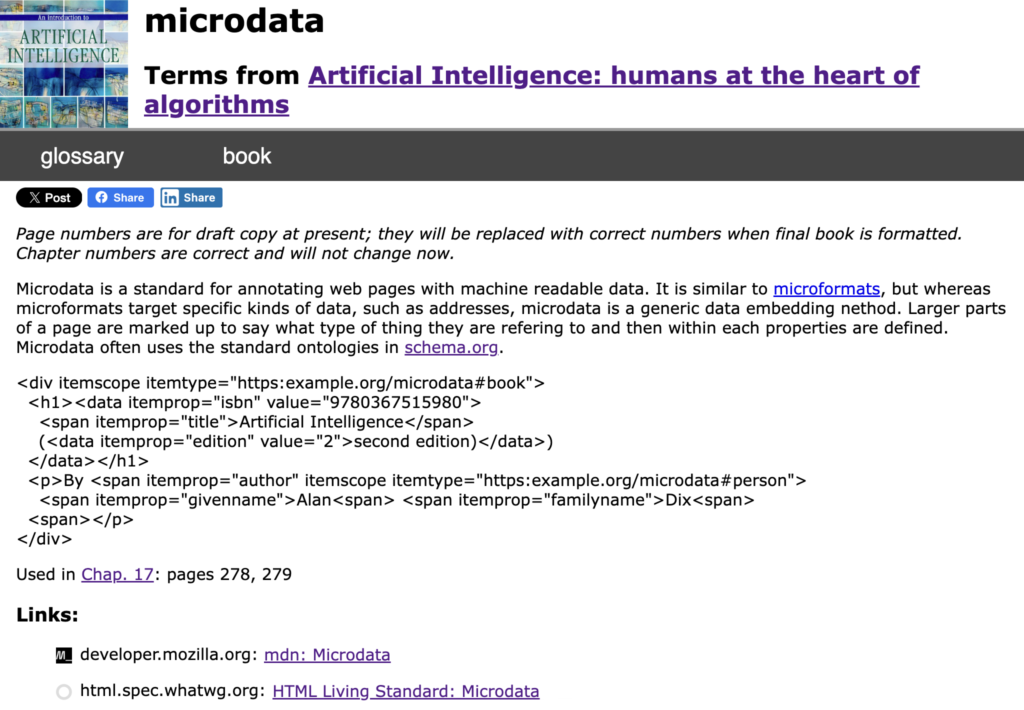
Some entries are quite short: a couple of sentences and references to the chapters and pages in the book where it is used.  However many include examples, links to external resources and images.  Some of the images are figures from the book, others created specially for the glossary.  In addition keywords in the entry link to other entries ‘wiki-style.

In addition the chapter pages on the AI Book web site each include references to all of the glossary items mentioned as well as a detailed table of contents and links to code examples.


Note that while all the entries are complete, there are currently many typos and before the book is published in June I need to do another pass to fix these!  The page numbers will also update once the final production-ready proof is complete, but the chapter links are correct.

How it is made

I had already created a workflow for the HCI Stats glossary, and so was able to reuse and update that.  Both books are produced using LaTeX and in the text critical terms are marked using a number of macros, for example:

The same information is then shown (ii) with the \term{microdata} added that says that the paragraph is talking about a book, that the author is Alan Dix and that he was born in Cardiff. Finally, the extracted information is shown as \term{JSON} data in (iii).

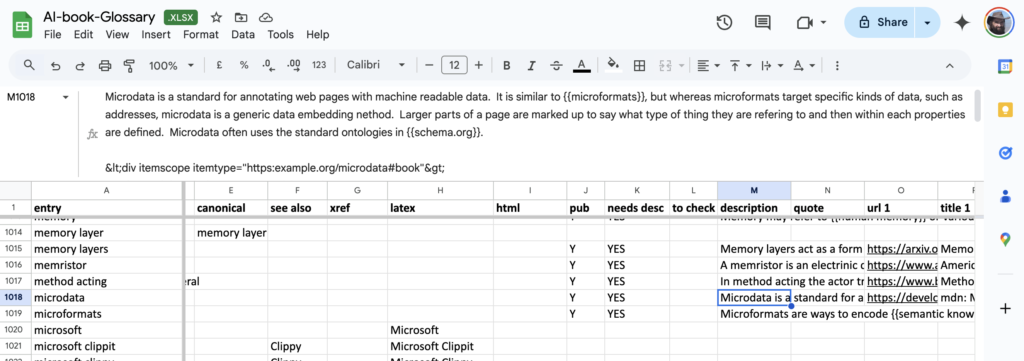
The \term macro (and related ones such as \termdef) expand to: (a) add an entry to the index file for the term;  (b) format the text with slight highlight; and (c) add a hyperlink to the glossary.  The index items can be gathered and were used to initially populate the first column of a Google Spreadsheet:

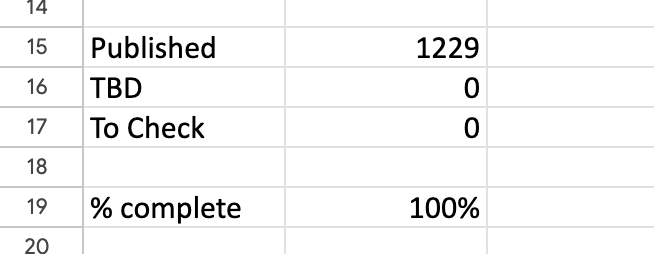
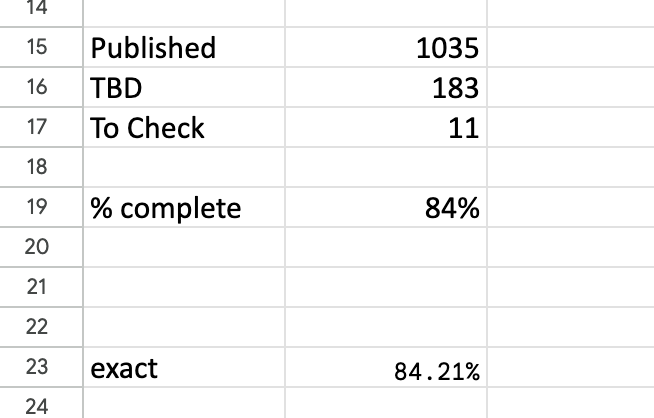
Over many months this was gradually updated.  In the final spreadsheet today (I will probably add to it over time) there are 1846 raw entries with 1229 definitions.  This includes a few items that are not explicitly mentioned in the book, but were useful for defining other entries, or new things that are emerging in the field.

On the left are two columns ‘canonical’ and ‘see also’ linking to other entries; these are used to structure the index.  Both lead to immediate redirects in the web glossary and page references in the text to the raw entry are amalgamated into the referenced entry.  However, they have slightly different behaviour in the web and book index.  If an entry has a canonical form it is usually a very close variant spelling (e.g. ise/ize endings , hyphens or plurals) and does not appear in the index at all as the referenced item will be recognisable.  The ‘see also’ links create “See …” cross references in the book and web index.

The ‘latex’ and ‘html’ show how the term should be formatted with correct capitalisation, special characters, etc.

The spreadsheet entries above are formatted on the web as follows (the book version similar):

On the right of the spreadsheet are the definition and urls of links to images or related web resources.  The definitions can include cross references to other entries using a wiki-style markup, for example the reference to {{microformats}} in the definition of microdata above.  They can also include raw html.

Just before these content entries are a few columns that kept track of which entries needed attention so that I could easily scan for entries with a highlighted ‘TBD’ or ‘CHK’.

The definition of microdata selected in the above spreadsheet fragment is shown as follows:

Gamification

Working one’s way through 1846 raw entries, writing 1229 definitions comprising more than 90,000 words can be tedious!   Happily I quite accidentally gamified the experience.

Part way through doing the HCI statistics glossary, I created a summary worksheet that kept track of the number of entries that needed to be processed and a %complete indicator.  I found it useful for that, but invaluable for the AI book glossary as it was so daunting.

The headline summary has raw counts and a rounded %complete.  Seeing this notch up one percent was a major buzz corresponding to about a dozen entries.  Below that is a more precise percentage, which I normally kept below the bottom of the window so I had to scroll to see it.  I could take a peek and think “nearly at a the next percent mark, I’ll just do a few more”.
 

Query-by-Browsing gets local explanations

Query-by-Browsing (QbB) now includes local explanations so that you can explore in detail how the AI generated query relates to dataset items.

Query-by-Browsing is the system envisaged in my 1992 paper that first explored the dangers of social, ethnic and gender bias in machine-learning algorithms.  QbB generates queries, in SQL or decision tree form based on examples of records that the user does or does not want. A core feature has always been the dual intensional (query) and extensional (selected data) to aid transparency.

QbB has gone through various iterations and a simple web version has been available for twenty years, and was updated last year to allow you to use your own data (uploaded as CSV files) as well as the demo datasets.

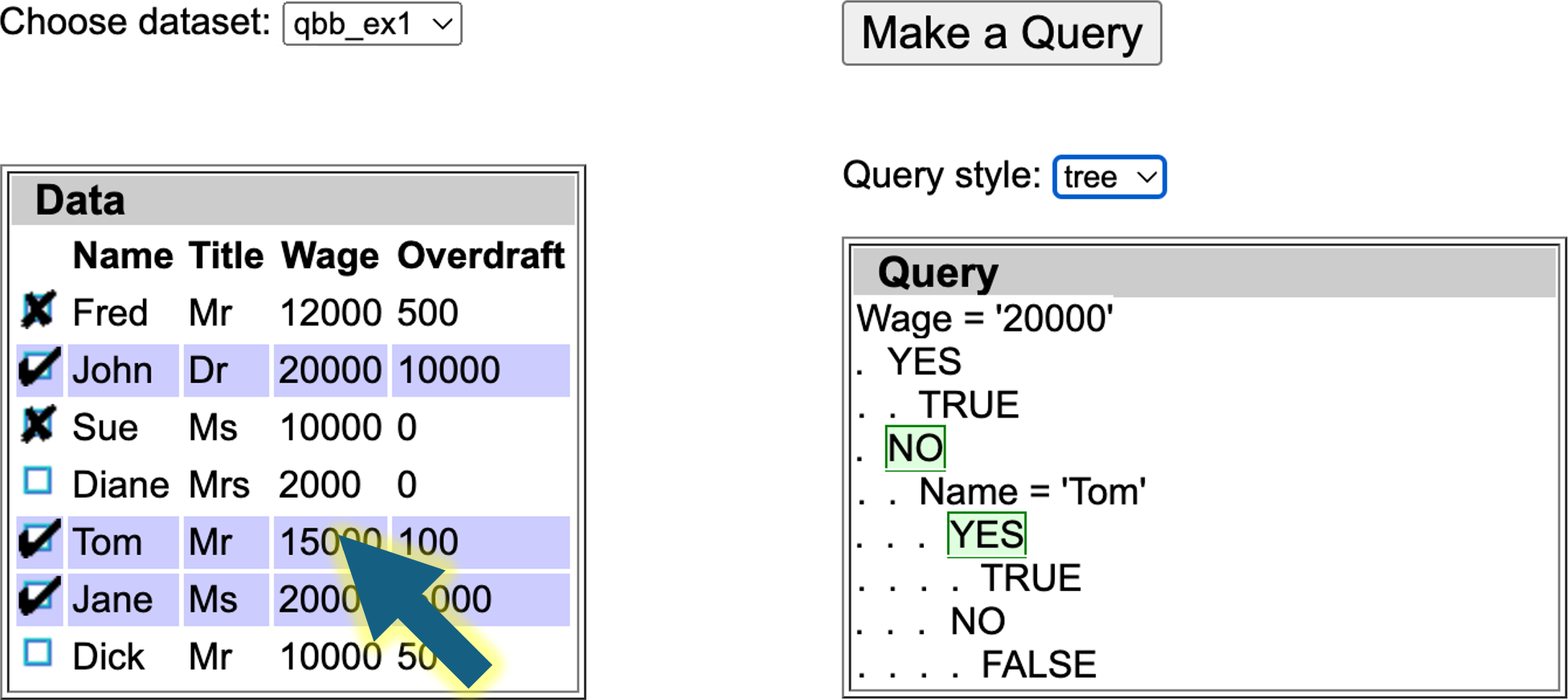
The latest iteration also includes a form of local explanation.  If you hover over a row in the data table it shows which branch of the query meant that the row was either selected or not.

Similarly hovering over the query shows you which data rows were selected by the query branch.

However, this is not the end of the story!

In about two weeks Tommaso will be presenting our paper “Talking Back: human input and explanations to interactive AI systems” at the Workshop on Adaptive eXplainable AI (AXAI) at IUI 2025 in Cagliari, Italy,  A new version of QbB will be released to coincide with this.  This will include ‘user explanations’, allowing the user to tell the system why certain records are important to help the machine learning make better decisions.

Watch this space …


fresh version of calQ available – bluring the boundary between calculator and spreadsheet

Fresh version of calQ available, an experimental calculator that gradually blurs the boundary between calculator, spreadsheet and coding.

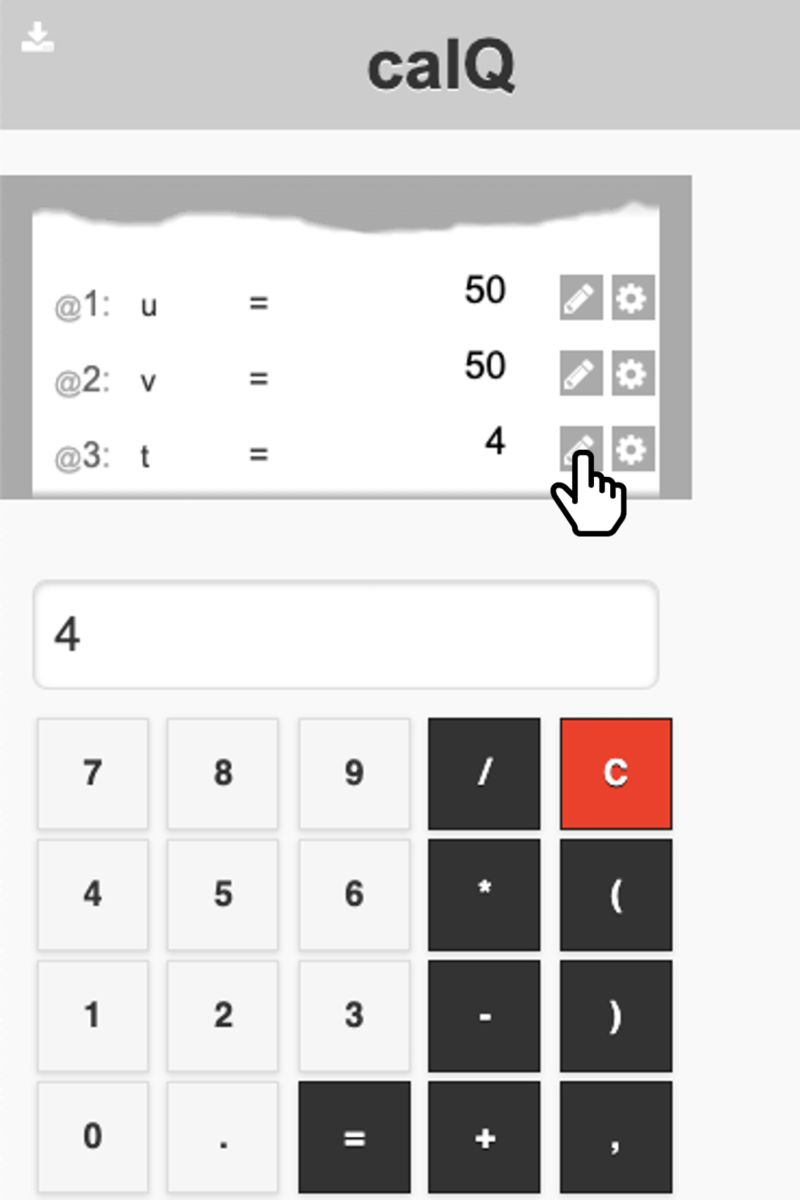
At first use it as a simple online 4-function calculator, but with a ’till roll’ showing you your calculation history – yes just like the old mechanical desktop ones!

If you want, when you want and when you feel comfortable, click past values and to use them in your current calculation, or to reuse constants such as tax rates. Update past values and seen later ones change, just like a mini-spreadsheet. Name lines of calculations to them to help you remember what you’ve done.

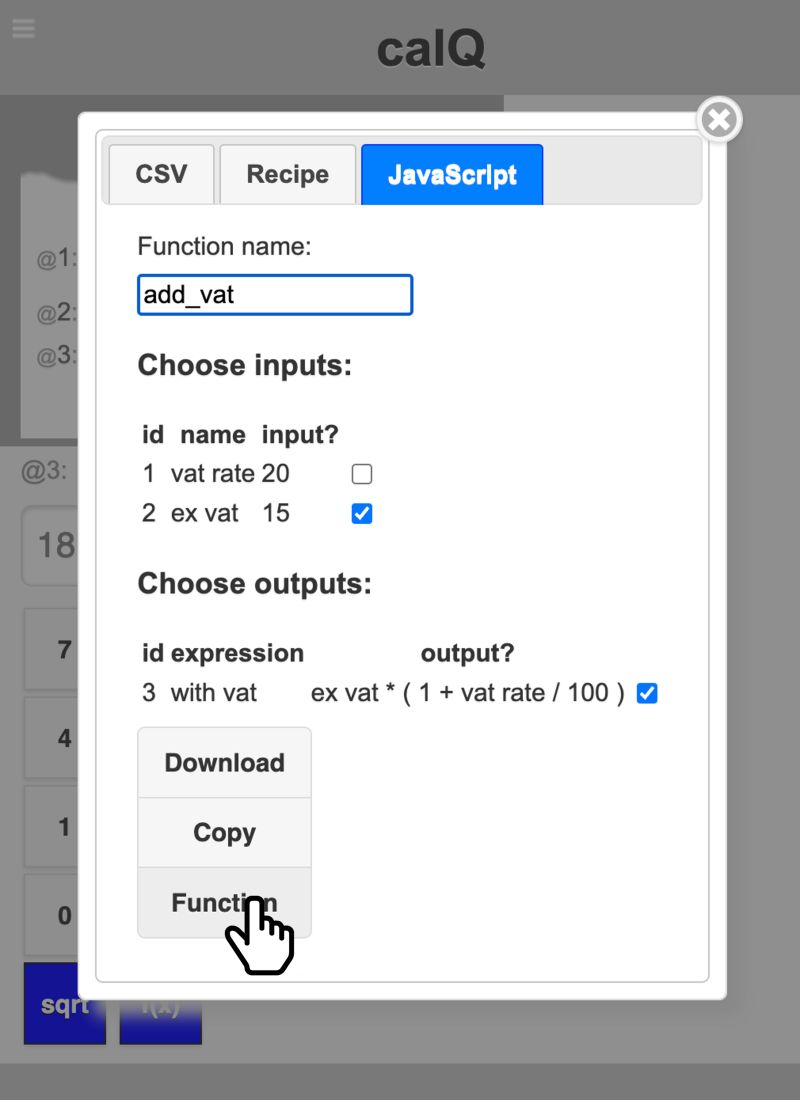
If you find yourself doing the same thing repeatedly, copy an old till roll and edit it, export the till roll into a spreadsheet or use it to make a custom function.

But if you want just add things up 🙂