
A gradient operator or gradient filter operates on an image to measure the gradient, that is the rate and direction of change of an image at each point. They are often used for edge detection early in a computer vision pipeline. For example, areas that change from dark to light have a gradient orthogonal to the line between the dark and light areas.
Some gradient operators are simple linear filters that produce separate values for the rates of change in x and y directions separately (the gradient vector). However, for initial edge detection we sometimes just want to measure the overall size of the gradient; gradient operators, such as Robert's operator and Sobel's operator focus on this.
Used in Chap. 12: pages 167, 169, 181
Also known as: gradient filters
Used in glossary entries: computer vision, edge detection, linear filter, Robert's operator, Sobel's operator
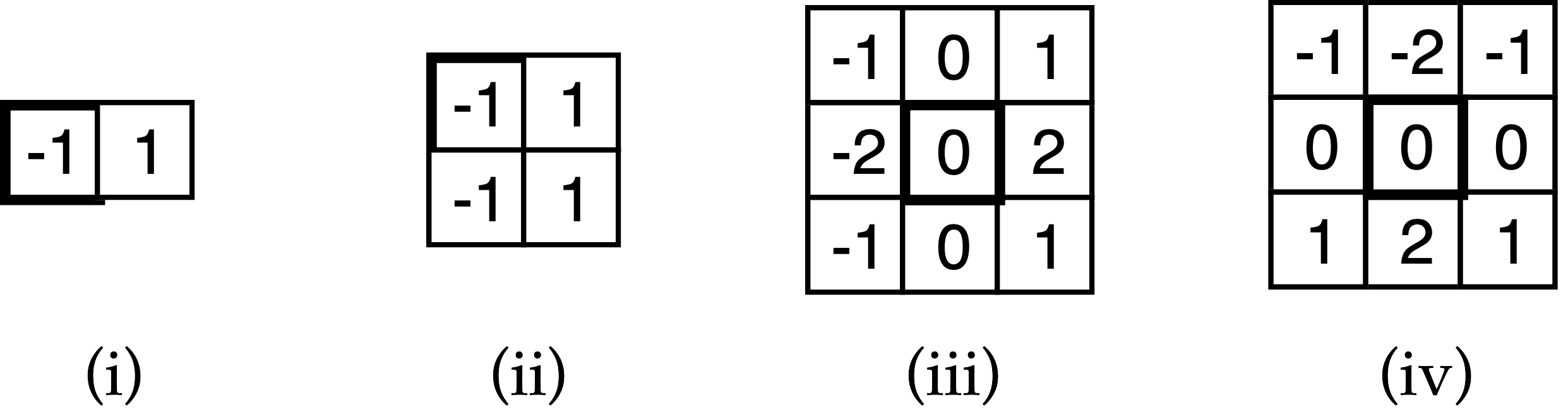
Different gradient filters: (i) and (ii) simple x-dircetion filters; (iii) and (iv) x and y versions of a slightly more complex filter.
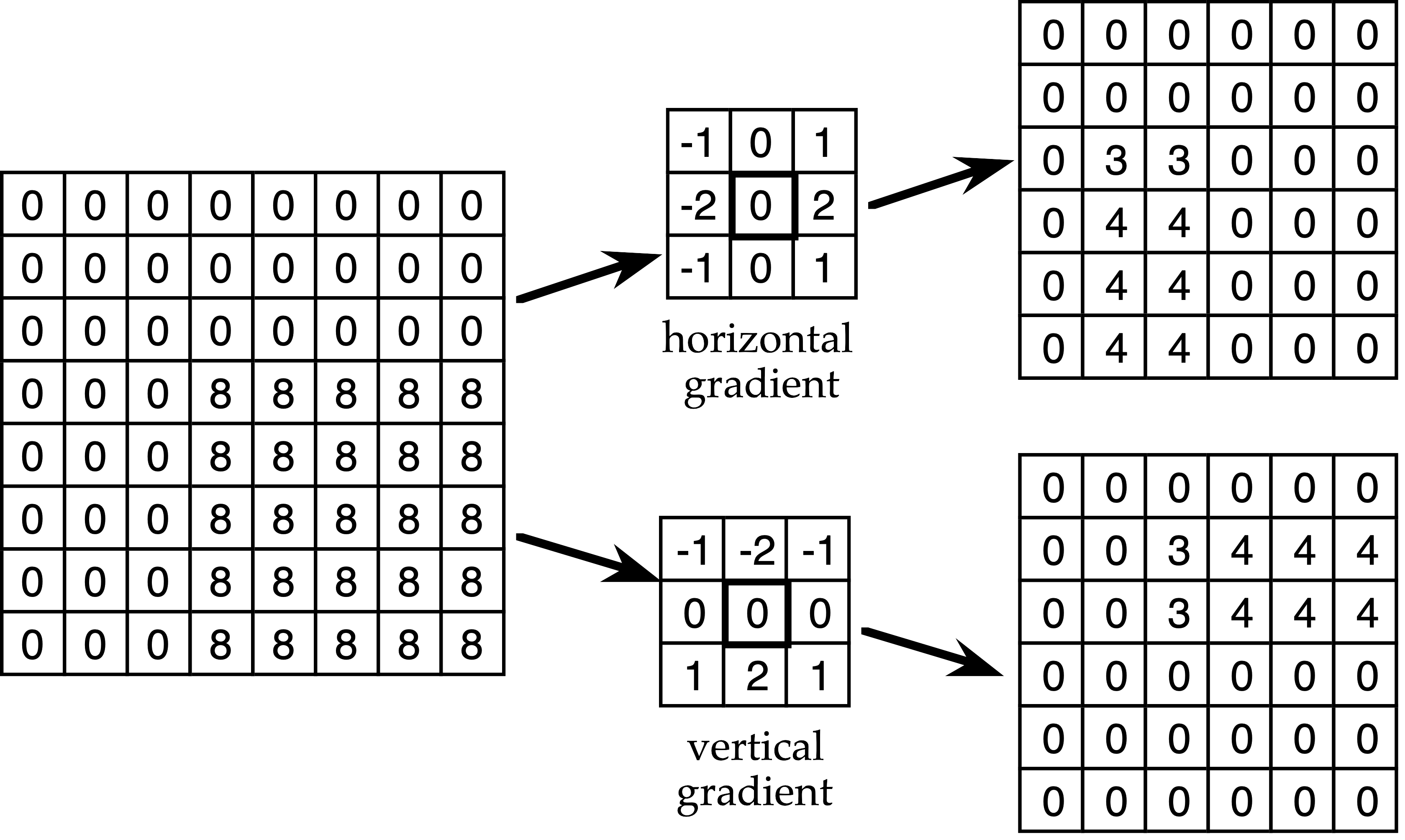
Applying a gradient filter
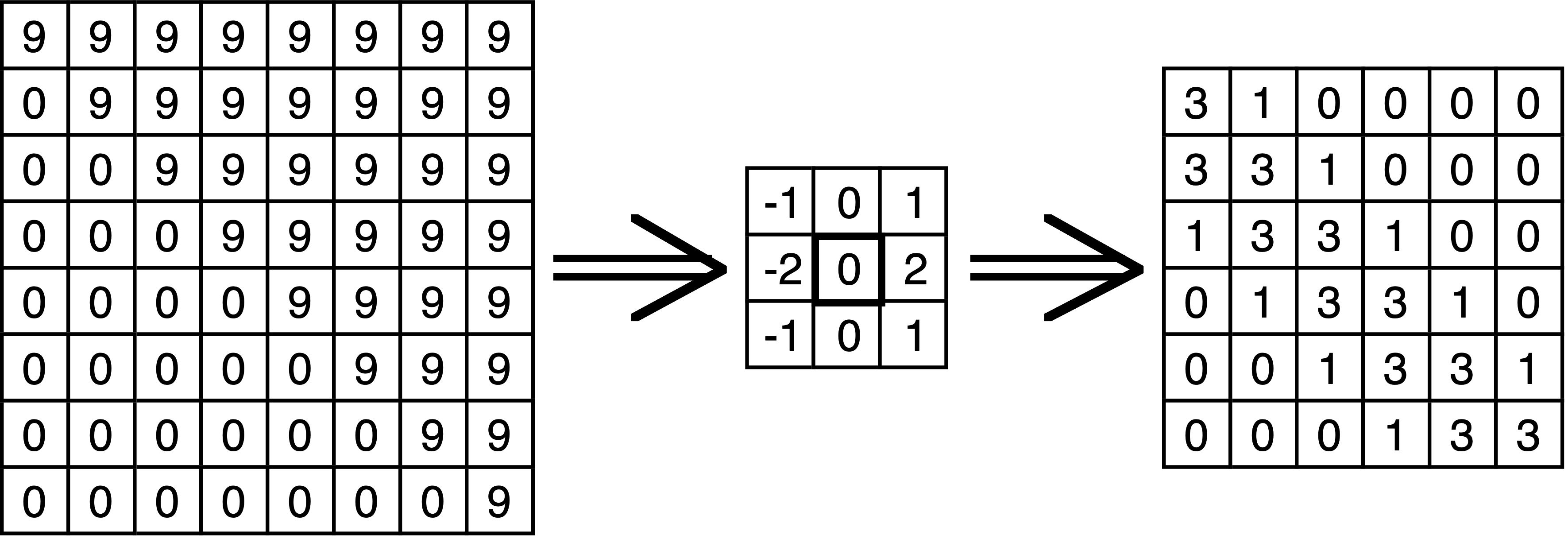
Gradient filter on a diagonal edge