Interaction design or UX design is almost always an iterative process – you don't get things right first time. The details vary, but the common picture is of a tight cycle of design (based on earlier user research), build (sketch or prototype) and then evaluate (formative evaluation, where the results of evaluation lead to redesign and a further loop. However, evaluation can often prompt fresh user research insights, or the design stage might deliberately be focused on creating a provotype or technology probe. Even when the initial cycles come to an end, feedback from the deployed system can feed back into further design, especially as part of continuous product development processes.
Also known as: iterative design cycle, iterative development
Used in glossary entries: continuous product development, formative evaluation, prototype, provotype, sketch, technology probe, user experience design, user research
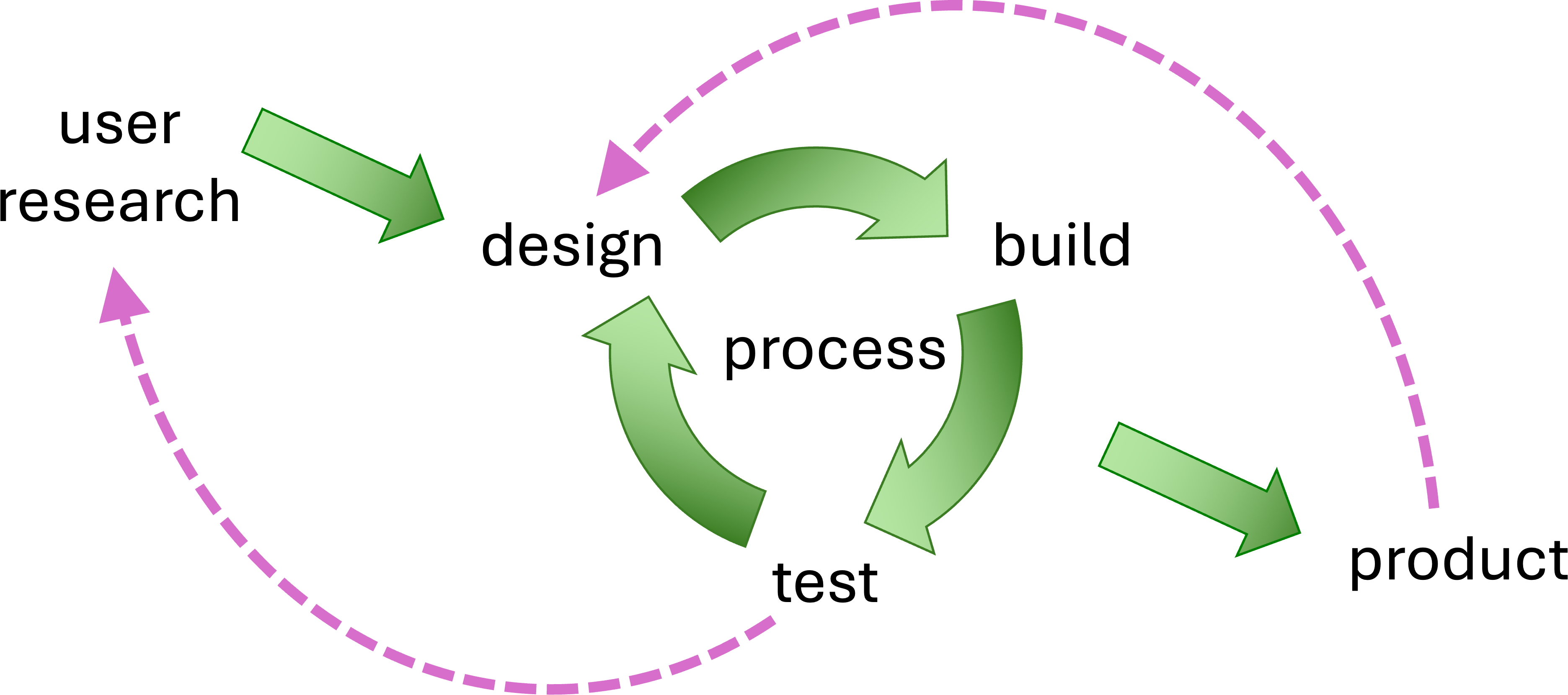
Figureb 1.1. Iterative phases of user experience design