
The base rate is the underlying level of prevalence of some attribute of a population. For example, the base rate of a disease is the proportion of people who normally have the illness. Where such a base rate is known it can be used as prior probability in Bayesian methods.
The base rate is important in assessing how likely the underlying attribute is for a particular individual. If you ignore the base rate you may make a poor assessment of the situation, sometimes called the base rate fallacy or base rate neglect.
The base rate may vary depending on the context, especially if there has been some form of prior selection or triage. For example, the base rate of a disease is usually far higher for patients admitted to hospital than for the general population as the reason they are in hospital is because their symptoms have caused alarm.
Used in Chap. 13: page 163; Chap. 14: pages 179, 180
Also used in hcistats2e: Chap. 1: page 16; Chap. 7: page 80; Chap. 11: pages 124, 127, 129
Used in glossary entries: base rate neglect, Bayesian reasoning, prior distribution
Links:
 Wikipedia: Base rate
- Wikipedia: Base rate fallacy
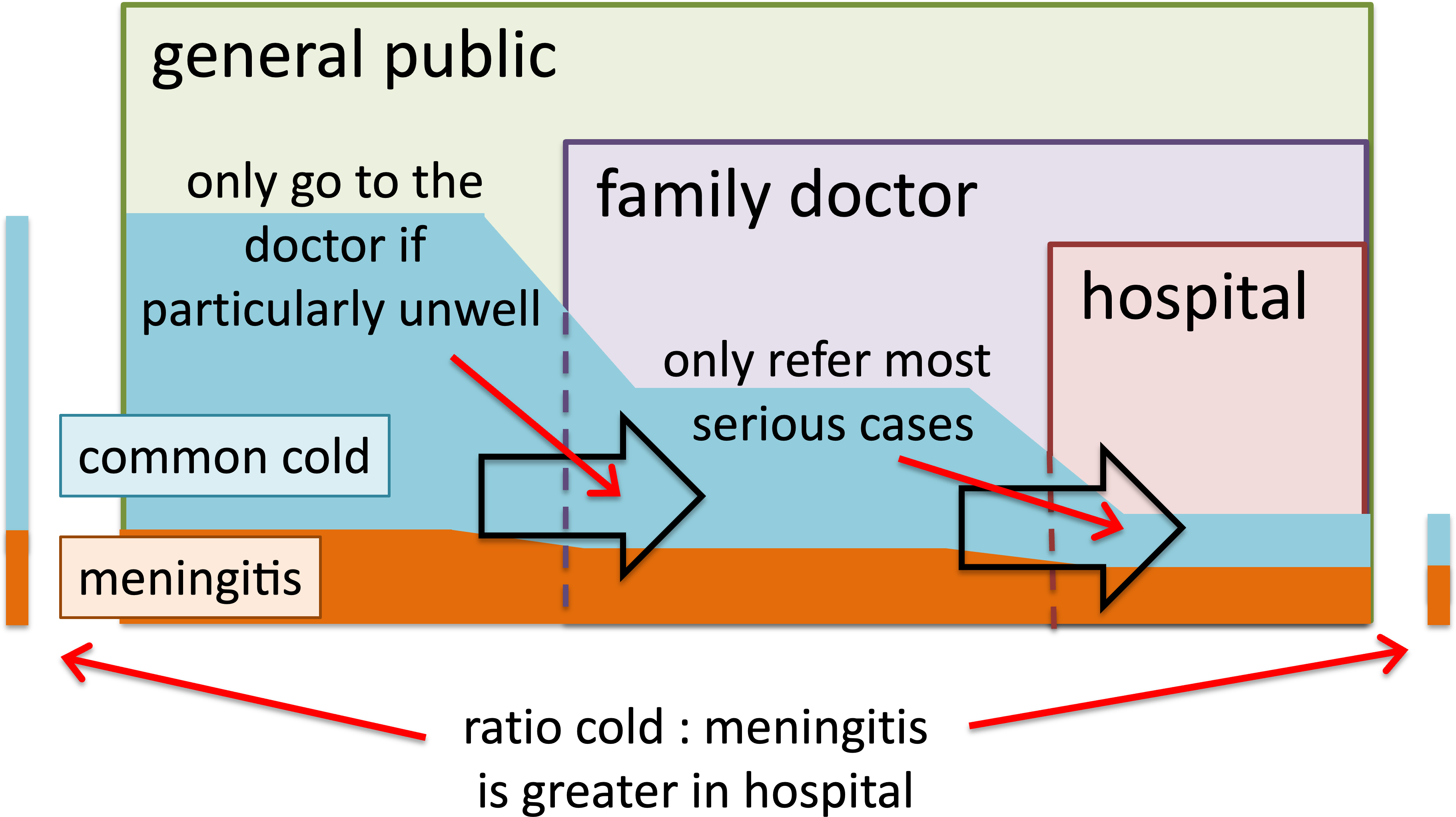
Figure 7.6: Base rate of meningitis cases gets higher as one moves through the medical system.