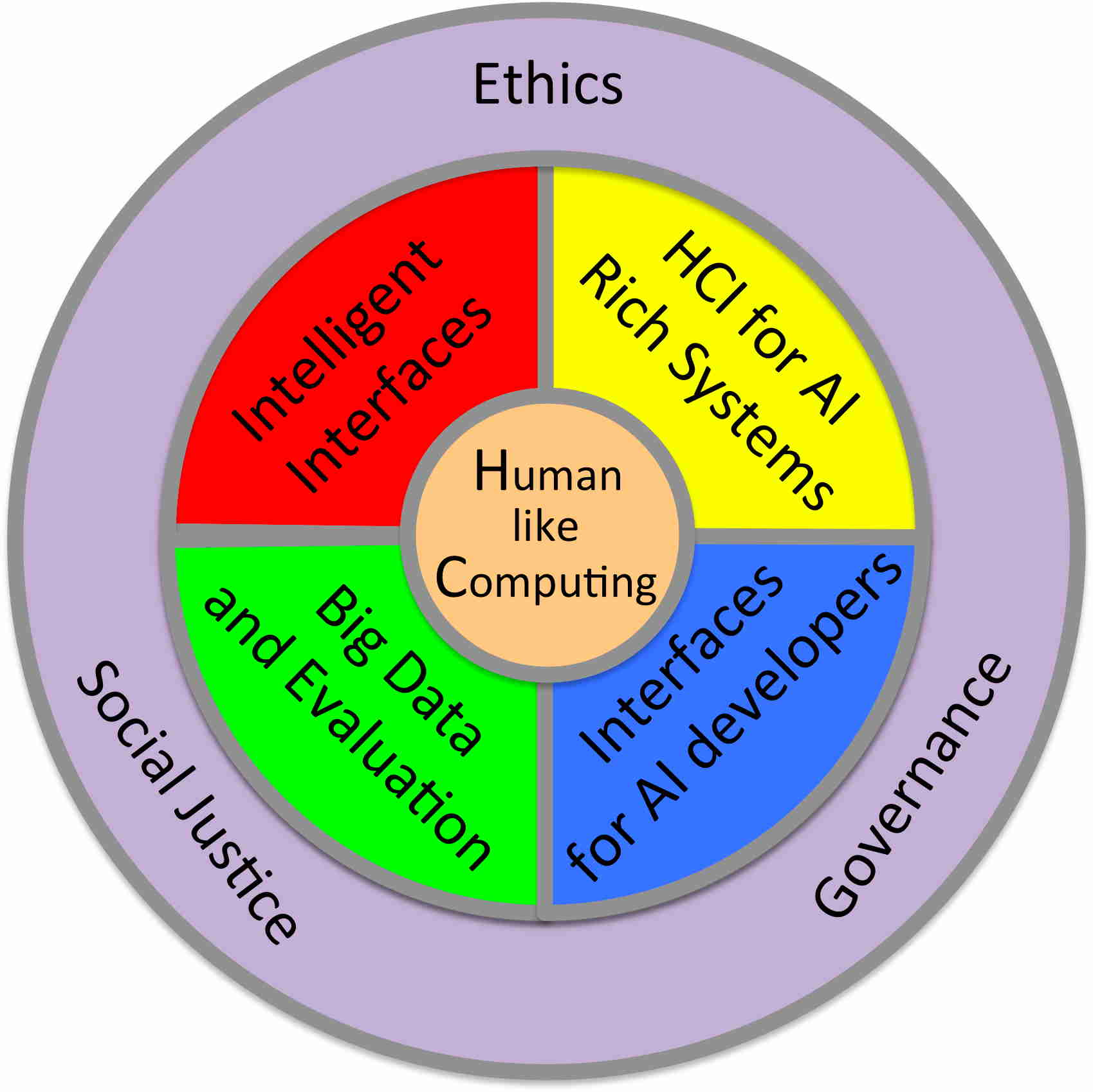
In some ways AI is just another technology we still need to understand users and their contexts, and match the appropriate technology with user needs even if that sometimes means not using technology at all. However, AI is different. We can think of the particular qualities of AI in terms of one A – agency – and three Cs – complexity, (un)certainty and co-adaptation. AI itself is not uniform it includes traditional rule based AI that is good for well defined problems, but poor at vague things and general knowledge; deep neural networks (DNN) that are better for ill-defined and vague problems, but offer few guarantees; and large language models, a special kind of DNN trained on vast text corpora, that is especially good at interpreting human text and speach and incorporates substantial amounts of general knowledge.
It is LLMs that have driven a lot of the recent interest and hype about AI, and they seem capable of what seems like intuition, creativity, empathy and reasoned arguments. However, this is also highly uncertain with silly mistakes and 'hallucination' ... what would appear to be artificial lies, or maybe just so keen to please it tells you what you'd like to hear. LLMs are effectively trained to be next word predictors, sometimes termed stochastic parrots, but this belies the fact that internal layers encode thinsg that are more like topics or ideas.
While LLMs such as ChatGPT, have been described in terms of high school or PhD level reasoning they do not 'think' in this way. Using thinking fast and slow as an analogy, neural nets are more like System 1, effectively subconscious thinking, which can be very powerful, rather than System 2 conscious thought. Yet this analogy is itself simplistic, LLMs are taught on vast amounts of text from hundreds of millions of people. Think about crows, they can be very clever in an instinctual way including learning from each other, but imagine every crow in the word linked at a subconscious level, like the Borg in Star Trek. That is a little like an LLM, a sort of collective unconscious – Jung rather than Einstein.
AI can be used in user facing systems, and user research needs to think about how to design for these circumstances. The second C, uncertainty, is critical here. We must accept that AI, just like people, will get things wrong and thus design with this in mind: surrounding it with software guardrails or ensuring that human users can assess the reliability of its outputs. This may often mean not using the very best AI, but appropriate intelligent instead choosing AI that together with the right human interactions works best. AS with every technology, it is not the technology that matters but the overall socio-technical system.
AI can also be used as part of the user experience research and development process. This includes analysing large volumes of video or looking for patterns in logs of deployed systems. Often product managers, sales and marketing teams and help desks have day-to-day contact with users; user research should use this knowledge, and AI may be able to help especially where there are already captured sources such as chat logs. One of my personal hopes is that LLMs can help with accessibility. Empathy is good, but can often mean putting ourselves into someone else's shoes ... but what is really important is to understand what it is like for them in their own shoes. This can be especially hard when people think differently to us, for example neurodiversity, dyscalculia, or different cognitive styles. Future AI and even existing LLMs will not be perfect, perhaps not even good, but could well be better than even the best designer at this, critiquing at an early interfaces or service design from the perspective of many different kinds of perceptual, physical and cognitive abilities and styles, including combinations.
There is justified fear that AI may be seen as a cheap alternative for UX professionals, but ideally AI should be used to enhance rather than replace, both in the products we create and in the processes used to create them. AI generated prototyps could enable large numbers of ideas to be trialled at different levels of fidelity enabling rich feedback from users. With suitable prompts chatbots can act as critics to question and probe early concepts. Let's use AI in UXR to do better rather than simply cheaper.
Slides
Used as personal notes for the talk, but not followed exactly!

|
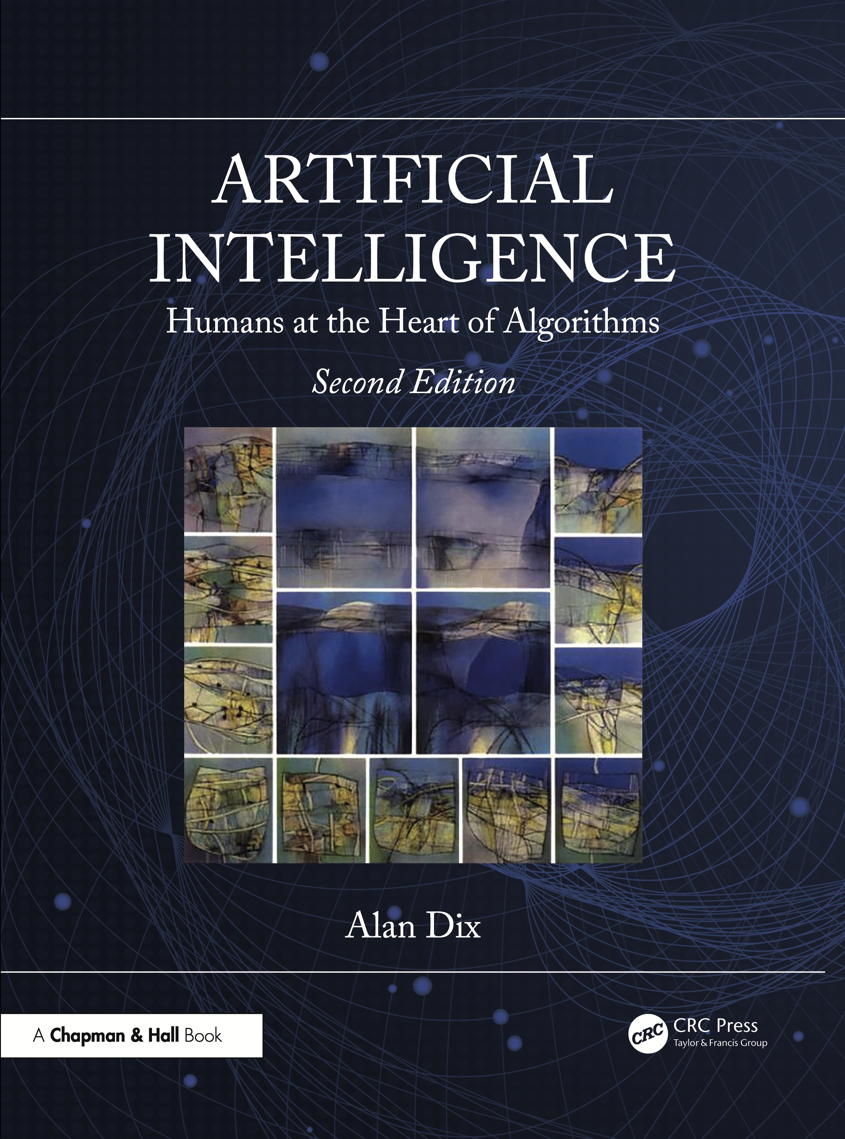
Artificial Intelligence: humans at the heart of algorithms