Private schools and open data

Just read short article “Private schools aren’t doing as well right-wingers like to think” by Rob Cowen @bobbiecowman1.  Rob analyses the data on recent GCSE results and finds that independent schools have been falling behind comprehensive schools in the last couple of years.  He uses this to refute the belief that GCSE standards are dropping, although equally it calls into question David Cameron’s recent suggestion that independent schools such as Eton should be given public money to start ‘Free Schools’2.

However, this is also a wonderful example of the way open data can be used to challenge unsupported views including official ones or ‘common knowledge’.  Of course, during the recent voting reform referendum, David Cameron expressed his disinterest in data and statistics compared with gut feelings, so the availability of data is only half the battle!

Graph shwoing comprehensive vs independent school performance

  1. Thanks to Laura Cowen @lauracowen for re-tweeting this.[back]
  2. See BBC News: Cameron: ‘Eton should set up a state school’[back]

Do teachers need a 2:2

Those in the UK will have seen recent news1 that the Education Secretary Michael Grove is planning to remove remove funding for teacher training from those who do not achieve a 2:2 or better. A report on the proposals suggests this will reduce numbers of trainee science teachers by 25% and language teachers by a third.

An Independent article on this lists various high profile figures who got third class degrees (albeit all from prestigious universities), who would therefore not be eligible – including Carol Vorderman, who is the Conservative Party’s ‘maths guru’2.

The proposed policy and the reporting of it raise three questions for me.

First is the perennial problem that the reporting only tells half the story.  Who are these one third of language trainees and one quarter of science trainees who currently do not have 2:2 degrees? Are they recent graduates who have simply not done well in their courses and treating teaching as an easy option? Are they those that maybe made poor choices in their selected courses, but nonetheless have broader talents after careful assessment by the teaching course admissions teams? Or are they mature students who did not do well in university, or maybe never went, but have been admitted based on their experience and achievements since (as we would do for any advanced degree, such as an MSc)?  If it were the first of these, then I think most parents and educators would agree with the government line, but I very much doubt this is the case.  However, with only part of the story how are we to know?  I guess I could read the full report, or maybe the THES has a more complete story, but how many parents reading about this are likely to do so?

Second is the implicit assumption that degree level study in a particular subject is likely to make you a good teacher in that subject.  Certainly in my own first subject, mathematics, many of the brightest mathematicians are unlikely to be good school teachers. In general in the sciences, I would far prefer a teacher who has a really deep understanding of GCSE and A level Physics to one who has a hazy (albeit sufficient to get 2:2 or even 2:1 degree) knowledge at degree-level. I certainly want teachers who have the interest and excitement in their topic to keep up-to-date beyond the minimum needed for their courses, but a broad ‘James Gleik’ style popular science, is probably more useful than third year courses in a Physics degree.

Finally the focus on degree classification, suggests that Michael Gove has a belief in a cross-discipline, cross-department, and cross-institutional absolute grading that appears risible to anyone working in Higher Education. Does he really believe that a 2:2 from Oxford is the same as a 2:2 at every UK institution? If so then I seriously doubt his ability to be hold the education portfolio in government.

To be fair this is a real problem in the Higher Education system as it is hard for those not ‘in the know’ to judge the meaning of grades, especially as it is not simply a matter of institution, often particular parts of an institution (notably music, arts and design schools) have a different profile to the institution as a whole. Indeed we have the same problem within the university system when judging grades from other countries. This has not been helped by gradual ‘grade inflation’ across the education sector from GCSE to degrees, driven in no small part by government targets and independent ‘league tables’ that use crude measures largely unrelated to real educational success. Institutions feel under constant pressure to create rules that meet various metrics to the detriment of real academic judgement3.

If the government is seriously worried about the standard of teachers entering the profession, then shift funding of courses towards measures of real success and motivation – perhaps percentage of students who subsequently obtain public-sector teaching jobs. If the funding moves the selection will follow suit!

… and maybe at the same time this should apply across the sector.  A few weeks ago I was at the graduation at LIPA, which is still managing near 100% graduate employment despite the recession and severe cuts across the arts.  Not that employment is the only measure of success, but if metrics are to be used, then at least make them real ones. Or better still drop the metrics, targets and league tables and let students both at school and university simply learn.

  1. Hit headlines about a week ago in the UK, just catching up after holiday![back]
  2. Reforms of teacher training will bring mass shortages, report finds“, Richard Garner, The Independent, Thursday, 11 August 2011, p14-15.[back]
  3. In fact, I came very close to resigning earlier in the summer over this issue.[back]

morning newspaper: MPs and Elgin Marbles

I usually only read the newspaper when travelling and either do the ‘free mineral water with newspaper’ deal (usually the Telegraph, maybe the only way they can sell newspapers), or whatever they have in the hotel or plane.

The front-page news today is the Israeli attack on the Gaza aid convoy, which needs no further comment.

of MPs

However, I also got yesterday’s Independent when I arrived at the Holiday Inn near midnight.  One of the main stories then was still the ‘outing’ and resignation of David Laws.  The key issue here (at least in principle) was not that nature of his personal relationships, but that he had not disclosed that the flat on which he was claiming rent belonged to his partner.

I was glad to see Mark Pack’s commentary in today’s Independent take a robust view of this, noting that while Laws may have broken rules (still to be determined), there had been no financial gain involved, and indeed the arrangement had saved the taxpayer money.  Pack’s contempt of the Telegraph was perhaps not unexpected in a column in a rival newspaper, but echoed my own feelings.

I was happily abroad during the height of the MPs expense ‘scandal’ last year, but was appalled at the coverage, not least because my travels take me to countries in Europe which would give anything to have the high standards of public office we take for granted in the UK.  In the end a handful of MPs may (still sub judice) have abused the system, but the vast majority were simply trying to do their job.

A short while ago I happened on the web on a page detailing the expenses of a Cardiff (now ex) MP Julie Morgan, when MPs expenses came under the spotlight, she rechecked her previous claims and indeed, with more careful checking, it turned out that the claims she had made on her mortgage did not match the actual expenditure.  Over the five years of the last parliament she had accidentally over-claimed in two years to the total of £800 … but in the other three years had under-claimed to the tune of £1900.  The rules meant she could not retrospectively be paid for the under-claimed years, but did pay back the £800 for the over-claims.  Despite being £1100 out of pocket, one of the lowest claiming MPs and indeed paying significant amount of her own salary to help maintain her constituency office, on the books she will part of the statistics of the large number of MPs who repaid expenses and so appear to have been doing wrong.  Crazy!

and of Marbles

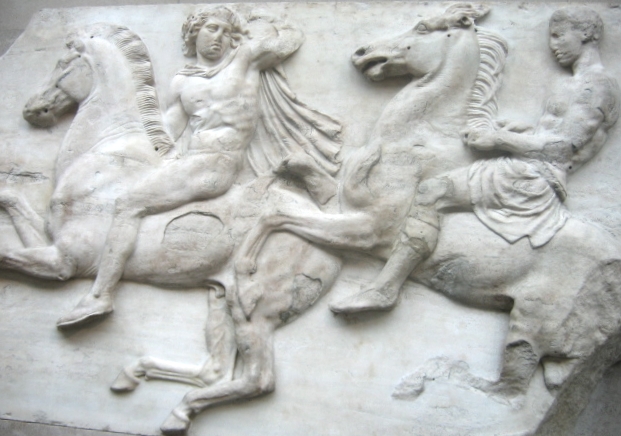
Back to today’s newspaper and deeper into the Independent a very old story that is entering a new phase: the fight for the return of treasures from around the world displayed in British Museums.  The most well know is of course the Elgin Marbles (maybe Germany may claim them as security for Greece’s Euro-bailout), but others include African treasures taken during punitive raids by British soldiers in the 19th Century.

The issues seem clear-cut for a Liberal-minded Independent reader, but maybe things are more complicated; certainly some of the items, including the bronze ‘Birmingham Buddha’ would not have survived to the present day if they had not been removed – if only the Victorian adventurers had also removed some of the giant Buddha statues destroyed by the Taliban in the 1990s.

I wonder how far repatriation should go, what is the statute of limitations for national treasure?  Maybe as the Birmingham Buddha travels back to India, several hundred shiploads of railtrack and steam trains will be repatriated to the UK, offloaded at Felixstowe docks and moved overland to form a mountainous sculpture of piled steel in the centre of Birmingham.

Having just been in Italy, I am sure there are many Italian artefacts in British museums, but then in Rome there are a number of Egyptian obelisk’s removed by the Romans 2000 years ago.  However, I would be surprised if, in turn, the Egyptians had not taken artefacts from other parts of the ancient world.  For that matter, what about the work done by the Israelites in Egypt before the Exodus?  If not for the fear it might be taken seriously I might suggest Israel could claim this.

In fact, these treasures are often more symbolic of the greater rape of natural resources and human labour that still continues today in many parts of the world today.  Indeed being brought up in the shadow of the South Wales coal valleys, I am well aware that the benefits of natural resources rarely go to the countries where they are found nor the labourers who mine them.

One of the key arguments against repatriation of ancient artefacts is that the curatorial standards are higher where they are presently.  Indeed the pillage of Iraqi sites after the fall of Saddam could be seen as overwhelming evidence that institutions such as the British Museum do the whole world a service.  Repatriation of artefacts to less secure countries would put at risk our shared global heritage; after all who knows what civilisation the UK and US will decide to decimate next.

update: (im)migration Holyrood vs Westminster

Since post last week on migration Holyrood vs Westminster, found link on the BBC website to the  the BBC News ‘Reality Check’ on immigration that showed net outflow of non-EU.  That is migration is out of the country not in!  Also Mark Easton’s blog @ the BBC, which gives more info.  Bottom line is that the outflow is even greater then the figure of 8000 given on BBC News.

warming to Gordon

Yesterday, my postal vote went off and lacking a Plaid Cymru candidate far from my homeland I made do with the best of the rest. This is perhaps the most exciting election in the UK for many years as it seems likely that one result will be a change in the voting system, so that in future elections I will not feel I need to vote ‘tactically’, but more for the people, parties and policies that I most deeply support.

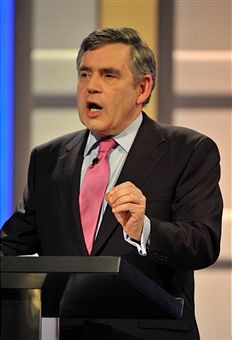
While this did not take me to the Labour fold at this election, one of the most surprising things about the general election campaign has been that throughout it, not withstanding gaffs along the way, I have found myself warming to Gordon Brown

Continue reading

Justice and mercy: al-Megrahi

I’ve been away most of the last two weeks with just a few days at home in between.  However, just before I was first away I heard the Scottish Justice Secretary Kenny MacAskill announce the release of al-Megrahi.  The decision was clearly hard and arbitrating the balance between justice and compassion is an unenviable task.

Whether the final decision was right or wrong, hearing MacAskill’s explanation of his decisions made me proud to be living in Scotland. Rather than bowing to the clear political pressure he was under, instead he kept his focus on what justice means in a land where compassion is at the heart of who we are.  In a world often ravaged by war and terror, suffering under human cruelty, and governed by the twins of aggression and revenge, MacAskill put himself under a  higher order and demonstrated the clear difference between a country still under the influence of its Christian past and those, from all sides, who besmirch the names of their own countries and religions by terror and violence.

Since then the grubby world of UK deals over oil and US deals over billions of dollars of compensation payments have both been aired, but it appears that MacAskill’s decision stood against pressure from all sides.

It was perhaps inevitable that the release would provoke some controversy, but disappointing nonetheless; one always hopes that integrity will triumph over knee-jerk reactions.  However, it has been especially galling to hear US voices raised in protest, a country which for so many years acted as safe haven for IRA fund raising; bankrolling the London bombings of the 1970s and beyond.  While Gaddafi supplied the weapons, the US public supplied the dollars1.  I was only young at the time, but these were vicious attacks in crowded tube trains and on the streets of London and elsewhere, designed specifically to cause maximum death and injury; and all the while, in the US, the IRA were allowed to operate freely due to political support in high places.

Obama came to power with the promise of a new attitude and a principled approach to politics, so it is doubly disappointing that he has failed this early test of principle over public opinion.  If the current White House staff cannot accept the independence of the Scottish justice system over politics, what hope in other parts of the world.

  1. Of course, while the Libyan involvement in the Lockerbie bombing and al-Megrahi’s guilt have been a matter of debate, the involvement of Libya in IRA terrorism was indisputable.   Since those days the IRA have become part of the Northern Ireland political process and Libya itself has been welcomed into the allied camp of the ‘war on terror’.  Whether in India, Israel or Ireland, yesterday’s terrorists become today’s politicians.  This makes the focus on al-Megrahi seem even more like that of a scapegoat.[back]

keeping track of history (Blair, Iraq, and all of us)

I had been struck by Blair’s long-awaited statement about the manner of the execution of saddam, that he belatedely made last Tuesday evening. However, I wanted to be suer of what he said, so yesterday evening attempted to find out. Perhaps I am just too poor a web-user, but I found it incredibly difficult. Google seraches fund many earelier news articles about the fact that he hadnlt said anthing at that stage, and ones from earelier last week saying what he was about to say something and what it would be (now-a-days it seems news is written before the event), but nothing reporting what he said or when he said it (I couldn’t recall the exect day either).Having found earlier or later articles in newspapers and on the BBC I thought it should be easy to trace from them to related ones and hence the statement I was after … but no. While most seem to offer long term “most important stories in 2005” archives, there does not appear to be an easy way (or possibly any way) to say “what was the BBC online stories for Wednesday January 12th 2007?”.

I did find the ‘number 10‘ site that does have a list of the prime minister’s speaches and statements, but of course not all his statements, just the ones they want you to read!

Eventually yahoo! news came to the rescue (albeit found through Google!) with a more recent article, but with links to background including a guardian online article from last wednesday … which yes! did have the full text of the relevant part of the statement:

As has been very obvious from the comments of other ministers and indeed from my own official spokesman, the manner of the execution of Saddam was completely wrong. But that should not blind us to the crimes he committed against his own people, including the death of hundreds of thousands of innocent Iraqis, one million casualties in the Iran/Iraq war and the use of chemical weapons against his own people, wiping out entire villages.

So the crimes that Saddam committed does not excuse the manner of his execution but the manner of his execution does not excuse the crimes.

Now to be fair, knowing this was accessible I tried an alternative tack and searched inside the guardian site using keywords and was able to find the article that way. Having realised this and did some searches on the bbc site and got the video of the statement. (Once I’d found suitable serach terms!)

So on newspaper and the bbc sites it seems you can do google-style searches, but not (unless I’m still missing something) ask “what was on the news last Wednesday” or (reasonably completely) what are the related articles to this one.

Obviously in a pre-web world I would not expect to be able to do this. I could (and still could) visit the British Library for old copies of newspapers (I assume they keep them) and for the last week possibly the local library. But of course when information is available it is not what you could find that counts, but what is easiest. The information that is available is the information that gets seen. Even in university our students are reluctant to read books as they believe they can find all they need on the web.

Now the reason I wanted to find the Blair statement was the reference to “one million casualties in the Iran/Iraq war”. He was rightly pointing out that the failings of the legal process of his execution should not blind us to the horror of his crimes. Now given the delay I assume the words were well prepared, and yet of three crimes things he noted one was this.

I guess the figure of 1 million sounded good (big numbers always impress), but to mention this without also noting that that war was waged with the complicit and explicit support of many countries including the UK and US seems at best amnesiac and at worst deceptive. Does he really not know this? Or is he simply hoping most who hear it won’t?

I can recall the Iran-Iraq war as a young adult, but those younger will have been in school and even for those around at the time I’m sure the memories get a little fuzzy, so perhaps he can get away with this type of manipulation. Or perhaps it is tht he only partly recalls the events and honestly presents this?

The US involvement is well documented, both in terms of miltary presence in the Gulf at the time, officially neutrally, but with minimal pretense acting against Iran who was then the ‘evil power’. Indeed (recalling my own and Nad’s earlier posts about the execution), in looking for this I found George Washington University’s National Security Archive of declaissified documents. In this there is a photograph of Donald Rumsfeld, then a special envoy from President Reagan, shaking hands with Saddam Hussein. This is not surprising, diplomatc have to do this all the time. Significantly though this meeting was, as the national secturity archives show, shortly after US intelligence had confirmed Iraq’s use of chemical weapons (Blair’s point 3) and discussed this at a presidential level. The US (in full knowledge) then went on to block UN resolutions deploring Iraq use of chemical weapons … initially with UK support. the ful story of UK support, I’m sure is there, but even harder to find … I seem to recall British warships in the gulf, but it was more than 20 years ago!
I an age of instant information, it is amazing that getting the basic facts of ongoing news items is so difficult. I recall a year or so back there was a call for journalists to give more context in theor reporting. However, when interviews a respected journalist insisted that theor job was the news, the changes not the backgrund … but without the background the interpretation of what we hear is different.

If journalists do not see it as their job to give such background and it is still so hard to find elsewhere, then politicians can go on deceiving themselves and their people.

politics of water – trouble in paradise

Today I got a mailed posting from Geoff Ellis who is visiting family in Mauritius (see copy at end of this entry)

Water politics is on the rise both because of climate change and competition for the use of rivers that cross borders. Recently I heard that the Dead Sea is drying up, although evidently the Aral Sea may be slowly recovering.

However, this also reminded me how as a child the Free Wales Army were my heroes. I was to small to understand much about it, but I do know they blew up water pipelines. Sadly (so I thought) they were eventually captured and put behind bars and the water pipelines were safe. Now I guess these were acts of sabotage rather than terrorism and in retrospect it sounds rather ridiculous … blowing up oil pipelines, yes, but water?

Being brought up with Cardiff they seemed sort of Welsh Robin Hood-like figures – very romantic.
It was only years later I understood the full story.

When I was nine years old my dad died and after that we lived on a state widows pension supplemented with students (and at one stage Irish navvies) staying half-board. Hard work – hot meals to prepare breakfast and evening, washing, not to mention cleaning the thick orange Cardiff clay from the carpets when the navvies were staying.

Once a year we got the bill for the water rates. There was also a once-a-year bill for the house rates (tax on land/housing), but as we were on low income we got 90% rebate for this, so it was not too bad. But when the water rates came, there was no rebate, and that stage not even monthly payments to spead the cost. Mum was good with money, budgeting carefully and saving for major bills, but still it was a big bill and hard to pay on one go … and for this water tax there was no relief or rebate, no matter your income, you had to pay in full.

It was then years later again and I was renting my own hose for the first time in Bedfordshire … England. When I got my first water rates it was for £60 (it was a few years ago!) and when I asked mum I found hers was for £300. The population in Wales is very spread out, so it is more expensive to transport the water, and hence, I guess, why it cost five times as much.

If Wales has a national resource (once the coal was plundered), it is water … it rains, and rains, and rains! When I was little my dad used to drive us up to visit Brecon, through the coal valleys north of Cardiff and up into the Brecon Beacons, with the vast reservoirs filling the valleys between the mountains. We picnicked beside the streams flowing down the mountains and wondered at the huge dams.

The water from these dams does not flow to Cardiff, the coal valleys or central Wales, but is piped to Birmingham … and as the water flows out, no money flows back. So English water is cheap, and the cost of Welsh water falls heavily on those who can afford it least.

The Free Wales Army deserve a play or a film, a slightly askance view … you cannot present blowing up water pipleines with a straight face, but with a hint of the issue beneath. For me as a child, the politics of water was a painful and serious business.
Geoff’s posting from Mauritius:

water trouble in paradise

L’Avenir, St. Pierre, Mauritius 31 Dec 2006

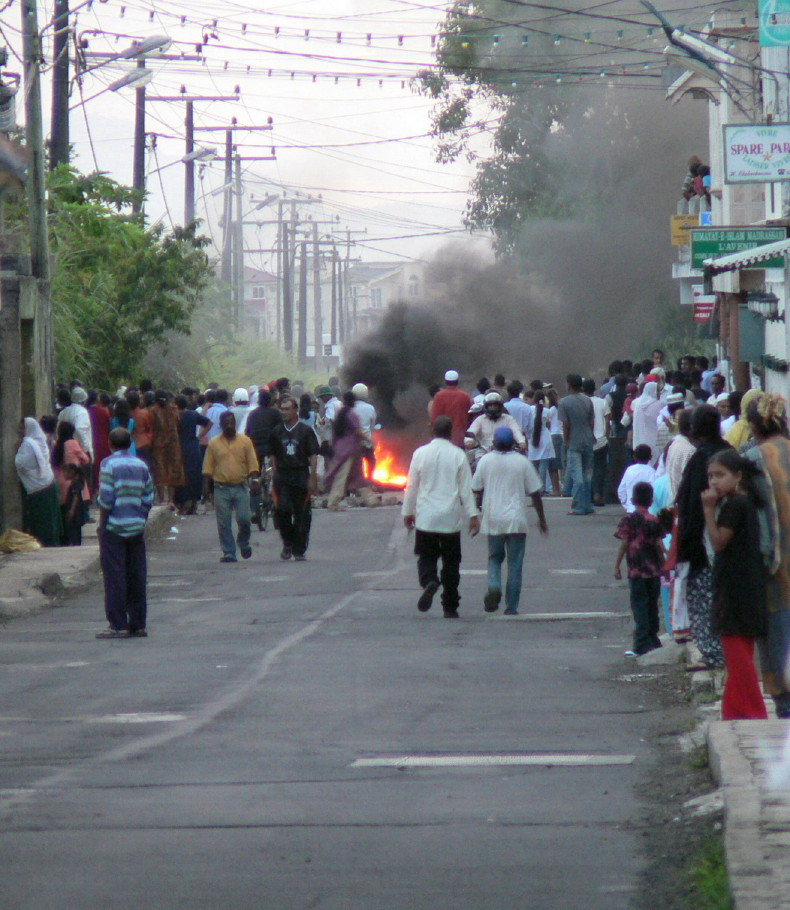
In this usually quite village of L’Avenir nestled amongst the mountains on the Mauritian plateau, New Years eve is a time for cleaning the house ready to welcome the New Year with fireworks. But this year is different. The road is ablaze at both ends of the village as some of the residents, frustrated by days of water cuts, have taken to Royal Road. They just haven’t run out of water, in the higher parts of the village for 5 days now, some have run out of clean clothes to wear. It is true that the reservoirs are lower this year due to less rainfall than usual over the winter months, but what makes the residents angry is the seemingly unjust way in which the limited water is supplied. In the neighbouring village of Beau Bois they have water and in the small town of St. Pierre a mile away I’ve seen people washing the pavements in front of their houses, no sign of water shortage there. And of course, the hotel swimming pools are full, the greens and fairways of the golf course are lush and I doubt if any ministers or government officials have been washing in a bucket! As one residents told me, making a civil disturbance in the only way to get the water turned back on, no one answers the water board office ‘hotline’ . Whether or not we will be able to wash in 2007 is somewhat in the hands of the gods.

Geoffrey Ellis (UK resident on holiday in L’Avenir with parents-in-law)
fire in the streets in Avenir
[see full image]

Saddam’s execution

The images of Saddam Hussein’s execution filled the newspapers this morning as they filled the TV news yesterday. Sadly the manner of the trial and execution seem to have transformed a ruthess dictator into a folk hero.

His execution now robs those who have had loved ones die in other mass executions during Saddam’s rule from knowing the truth. And moreover lets those in the West implicated in many of them off the hook.

I recall during the Iran-Iraq war, the reports in that clarion of left wing journalism, the Reader’s Digest, of the use of chemical weapons against civilian Kurds. Everyone knew about it, except the governments of the West for whom Saddam was an ally against Iran and the Kurds an inconvenince – friends of Iran and troublesome in Turkey. No justice for these families.

And why no trial for the massacres in the South following the Gulf War? Perhaps fear that it would bring back to mind the way we encouraged ethnic civil war in the hope it would topple Saddam without dirtying our own hands.

The hypocracy of the ‘diplomacy’ of the late 20th and early 21st century is sickening. In Iraq as in Yugoslavia, we sow the seeds of ethnic strife and then throw up our hands in horror at the results.

first take the plank out of your own eye, and then you will see clearly to remove the speck from your brother’s eye