Christmas services

Lots of travelling about to see family and lots of deadlines over Christmas period, but now back on Tiree and it’s New Year’s day, so time for a short breather.

All the travelling about meant we didn’t seem to get to as many carol services and the like before Christmas, so it didn’t really feel as if Christmas Day was near until it was upon us.

Miriam is in the choir at Birmingham Cathedral and was singing at both the midnight service on Christmas Eve and the Christmas Morning service, so we all spent Christmas with her.  To be honest I expected the Cathedral services to be beautiful, but lifeless affairs.  I was very wrong.
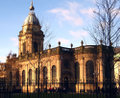
The midnight service was full-on bells-and-smells with smoking incense wafted over Bible, congregation and anything else in range.  Poor Fiona, who had a cough anyway, struggled to breath through the rich spicy fumes and one other girl had to step out for air.  As well as the people, but I’ll come to those later, the turning point to me was when the priest, dressed in a white surplus with beautiful and intricate embroidery,  came to the centre of the aisle to read the New Testament lesson, flanked on either side by candle bearers in cassocks …  of course all heavily wafted in incense … and she began to read.   Clearly she too found it hard to breath in the smoke (Miriam told us later that the incense was only occasionally used in the services, so she had little practice reading under adverse conditions), but, as her head moved from side to side reading the lesson, the light caught a sparkle of glitter in her hair and suddenly the solemnity of the occasion, her own humanity and the joy of the celebration all came together.  A sparkle in the hair a parable for the message of incarnation.

To be honest tired after so much driving, thesis reading, etc., I fell asleep through some of the sermon … and yes, sometimes if you notice me in a talk with my eyes closed it is rapt attention, but sometimes …

Christmas services are always times which bring in the once-a-year visitors as well as the weekly faithful, so always difficult for the preacher.  Some primarily address the latter, hoping that the former will absorb the message and the occasion, often appropriate in small communities.  The opposite alternative is to treat it as an ‘opportunity for evangelism’ addressing the newcomer, but risking treating them as gospel cannon fodder and maybe even neglecting to focus on the celebration that is Christmas. This seems particularly difficult in a cathedral, which is both a place of worship, but also part of civic life; there to serve the city, to welcome people in on their own terms and yet offer them more.

Again, being honest, I expected the preacher to ‘play safe; bland words and a Christmas greeting, but instead (between my naps) he seemed to get it just right, not ‘preachy’ but welcoming yet leaving no doubt that we were not gathered just to sing a few nice songs, but there to celebrate the birth of a real baby, who became a real man, offering a rich promise, and making real demands on our lives.

However, what struck me most was not so much the ‘front activity’ of  priests and candles, lectern and Bible, or even bread and wine, but the people in the congregation. So varied: the lady in ‘Sunday best’ everybody’s image of the librarian or old-style school teacher, three men with tightly cropped hair like the Mitchell brothers in Eastenders, a group of young women maybe going to a party later, a girl in a heavy-metal sweat shirt, and a young couple punctuating their devotions with the occasional hug.  I wondered at their stories, some regulars, some who, like us, had come especially for the service, some who maybe wandered in.

On the Sunday after Christmas we were all in Kendal and went to the morning service at Sandylands, our regular church while we’d lived at Kendal.  Being the post-Christmas service, one of the readings was the familiar story of when Mary and Joseph took the new baby Jesus to the temple to make their offering of two doves after the birth.  Simeon is an old man but had been told that he wouldn’t die until he has seen the Messiah … he sees the baby Jesus and recognises him.
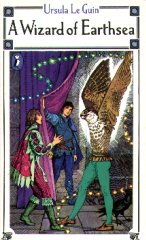
As this was read, the mathematician in me woke up and I did some quick sums, probably a few 100,000 in Palestine at that time, birth rate for replacement maybe 3%, so thousands of babies a year brought to the temple, maybe a few dozen babies every day … and out of  all these Simeon spots one.  I was reminded of Ursula le Guin’s book “A Wizard of Earthsea“.  It is set in a world of oceans and islands … not so far different from the Hebrides … all interlaced with magic.  The young wizard Sparrowhawk is on a quest and in a tower in the far north is lead into a deep room where a great treasure is stored.  The room is empty, but amongst the flagstones on the floor, he spots one, a small insignificant stone, worn from depths of ages, but so so old and holding a deep ancient dark power.  Like Sparrowhawk, Simeon spots the one of great value amongst the many; does it take special eyes or a special gift to see, or just willingness to look?

Although the old dark powers in “A Wizard of Earthsea” are just a story, the Christmas celebrations are themselves set at midwinter at the time of many old pre-Christian festivals.  The early Christians saw no problem in embracing pagan places and even names  (even the English word Easter!) so long as they were consistent with the Christian purpose. Indeed,  it is commonly assumed, there being no indication in the Gospels as to the time of year when Jesus was born, that the early Christians chose the Roman feast of Sol Invictus, the official State sun god so as to declare Christ the Son’s place at the heart of formal society; like those in Birmingham today, treading a difficult line between personal devotion and civic religion.

The parties, eating and drinking of Christmas capture some of the spirit of pagan midwinter, celebrating the sun’s return, and not entirely absent from cathederal mass … see the sparkle in the hair amongst the robes and dress coats of formal civic celebration, but both raw humanity and ordered civilisation give way to something greater.   There is a logic that is not the tit-for-tat logic of base human nature, nor the clinical logic of pure reason (although both are part of us), but instead is a logic that takes all the problems and pain of the world and answers them in a tiny wriggling baby.

short story for Christmas

A few years ago I wrote a short children’s story “Christopher’s Christmas“.  I put a PDF online at the time, but just put the whole thing online as HTML to read in the browser.

This was partly written because it is too easy to forget how difficult things are for little children, and also as a personal catharsis remembering myself, as a slightly older child, on my first Christmas after my own dad died.

… and no, I didn’t get a 5 year old to draw the pictures … just that I draw like a 5 year old :-/

island life – three weeks in

It was three weeks yesterday when we moved here to Tiree and slowly getting into the pace of island life.  Steve, our first visitor, left on Thursday, on the ‘big’ plane (about 30 seats).  Had a great time working with Steve on the Physicality book that we are writing as an outcome of the DEPtH project.  We managed the odd walk on the beach together, albeit rather windy, and Steve, brave soul, cycled several times from his hotel in Scarinish to our house, not far and flat all the way, but with a 30 knot wind in your face!

Otherwise have had our first fuel shortage when we needed petrol for the car and found there was none on the island for several days (incidentally the garage must have one of the best views in the country), had our first takeaway (fish and chip van 100 yards from the house … we are well positioned), lit our first fires (ah the smell of coal smoke reminds me of my childhood), registered at the doctors to get vaccinations ready for India (not in regimented 10 minute slots!), and of course lots of paddling in the sea … but think I might be developing my first every chilblains … well I know my own fault, but how can I resist when there is sea and foaming waves to dip my toes in.

It still feels like a holiday …  of course holiday for me tends to mean working with a nice view … so not sitting around the whole day watching the wind blow foam back in clouds from the breaking wave crests and the patterns of dark and light constantly shift with the moving clouds.  Getting lots done, for once clearing the to-do list faster than it grows (although it does still grow, some things don’t change), but for the first time for years free of that ever present feeling of heavy heavy weight on my shoulders.

… and on Monday I’ll be experiencing the flight to Glasgow myself as travelling to Dublin to give the SIGCHI Ireland inaugural lecture.  Managed to work out flights without needing a stay-over in Glasgow, but I have a feeling I will get to know the Holiday Inn Express at Glasgow airport quite well over the coming year.

The Cult of Ignorance

Throughout society, media, and academia, it seems that ignorance is no longer a void to be filled, but a virtue to be lauded.  Ignorance is certainly not a ‘problem’, not something to be ashamed of, but is either an opportunity to learn or a signal that you need to seek external expertise.  However, when ignorance is seen as something not just good in itself, but almost a sign of superiority over those who do have knowledge or expertise, then surely this is a sign of a world in decadence.

Although it is something of which I’ve been aware for a long time, two things prompt to think again about this: a mailing list discussion about science in schools and a recent paper review.

The CPHC mailing list discussion was prompted by a report by the BBC on a recent EU survey on attitudes to science amongst 15-25 year olds.  The survey found that around 1/2 of Irish and British respondents felt they “lacked the skills to pursue a career in science” compared with only 10% in several eastern European countries.  The discussion was prompted not so much by the result itself but by the official government response that the UK science community needed to do more “to understand what excites and enthuses young people and will switch them on to a science future.”  While no-one disagrees with the sentiment, regarding it as ‘the problem’ disregards the fact that those countries where scientific and mathematical education is not a problem are precisely those where the educational systems are more traditional, less focused on motivation and fun!

I have blogged before about my concerns regarding basic numeracy, but that was about ‘honest ignorance’, people who should know not knowing.  However, there is a common attitude to technical subjects that makes it a matter of pride for otherwise educated people to say “I could never do maths” or “I was never good at science”, in a way that would be incongruous if it were said about reading or writing (although as we shall see below technologists do do precisely that), and often with the implication that to have been otherwise would have been somehow ‘nerdy’ and made them less well-balanced people.

Sadly this cult of ignorance extends also to academia.

A colleague of mine recently had reviews back on a paper.  One reviewer criticised the use of the term ‘capitalisation’ (which was in context referring to ‘social capital’) as to the reviewer word meant making letters upper case.  The reviewer suggested that this might be a word in the author’s native language.

At a time when the recapitalisation of banks is a major global issue, this surely feels like culpable ignorance.  Obviously the word was being used in a technical sense, but the reviewer was suggesting it was not standard English.  Of course, ‘capital’ in the financial sense dates back certainly 300 years, the verb ‘capitalise’ is part of everyday speech “let’s capitalise on our success”, and my 30 year old Oxford English Dictionary includes the following:

Capitalize 1850. …. 2. The project of capitalizing incomes 1856. Hence Capitalization.

Now I should emphasise it is not the ignorance of the reviewer I object to; I know I am ignorant of many things and ready to admit it.  The problem is that the reviewer feels confident enough in that ignorance to criticise the author for the use of the word … apparently without either (a) consulting a dictionary, or (b) while filling out the online review form bothering to Google it!

This reminded me of a review of a paper I once received that criticised my statistical language, suggesting I should use the proper statistical term ‘significance’ rather than the informal language ‘confidence’.  Now many people do not really understand the difference between significance testing (evidence of whether things are different) and confidence intervals (evidence of how different or how similar they are) – and so rarely use the latter, even though confidence intervals are a more powerful statistical tool.  However the problem here is not so much the ignorance of the reviewer (albeit that a basic awareness of statistical vocabulary would seem reasonable in a discipline with a substantial experimental side), but the fact that the reviewer felt confident enough in his/her ignorance to criticise without either consulting an elementary statistical text book or Googling “statistics confidence”.

So, let’s be proud of our skills and our knowledge, humble in accepting the limits of what we know, and confident enough in ourselves, so that we do not need to denegrate others for doing what we cannot.  Then ignorance becomes a spring board to learn more and a launching point for collaboration

Coast to coast: St Andrews to Tiree

A week ago I was in St Andrews on the east coast of Scotland delivering three lectures on “Human Computer Interaction: as it was, as it is and as it may be” as part of their distinguished lecture series and now I am in Tiree in the wild western ocean off the west coast.

I had a great time in St Andrews and was well looked after by some I knew already Ian, Gordan, John and Russell, and also met many new people. Ate good food and stayed in a lovely hotel overlooking the sea (and golf course) and full of pictures of golfers (well what do you expect in St Andrews).

For the lectures, I was told the general pattern was one lecture about the general academic area, one ‘state of the art’ and one about my own stuff … hence the three parts of the title!  Ever for cutesy titles I then called the individual lectures “Whose Computer Is It Anyway”, “The Great Escape” and “Connected, but Under Control, Big, but Brainy?”.

The first lecture was about the fact that computers are always ultimately for people (surprise surprise!) and I used Ian’s slight car accident on the evening before the lecture as a running example (sorry Ian).

The second lecture was about the way computers have escaped the office desktop and found their way into the physical world of ubiquitous computing, the digital world of the web ad into our everyday lives in out homes and increasingly the hub of our social lives too.  Matt Oppenheim did some great cartoons for this and I’m going to use them again in a few weeks when I visit Dublin to do the inaugural lecture for SIGCHI Ireland.

for 20 years the computer is chained to the office desktop (image © Matt Oppenheim)

(© Matt Oppenheim)

... now escapes: out into the world, spreading across the net, in the home, in our social lives (image © Matt Oppenheim)

(© Matt Oppenheim)

The last lecture was about intelligent internet stuff, similar to the lecture I gave at Aveiro a couple of weeks back … mentioning again the fact that the web now has the same information storage and processing capacity as a human brain1 … always makes people think … well at least it always makes ME think about what it means to be human.

… and now … in Tiree … sun, wild wind, horizontal hail, and paddling in the (rather chilly) sea at dawn

  1. see the brain and the web[back]

From Parties in Aveiro to Packing A Van in a week

Last Friday I was in Aveiro giving  keynote at ENEI, the  national congress of Portuguese informatics students.  The event was organised for and by the students themselves and I was looked after wonderfully.  João was especially great picking me up from Lisbon airport at midnight, driving me to Aveiro the next day and then on Saturday driving me to Porto airport after less than 2 hours sleep … but more on that later …

The congress itself was in Portuguese except my talk, and I  was only able to spend one day there as I needed to get back to pack, and so, by the time I met press and talked to different people, the day flew by  … in time for an evening of typical Portuguese culture of different kinds.

First dinner of roast suckling pig – prepared in the town near Aveiro where this is the traditional dish.  Those who know me know that despite all appearances to the contrary: sandals, long hair, beard; I am NOT a vegetarian 🙂  The meat itself reminded me of the rich flavour of belly pork at Sunday dinners when I was a small child; although much more delicate and without the tooth breaking thickness of the older meat.

After traditional cuisine I was given a taste of traditional student life.  This period was a weekend when first year freshmen students all over Portugal have parties … for several nights in a row.  The student organisers I was with had been up to 6am the previous night as well as organising the conference during the day.  And this night, after having eaten suckling pig at 10pm, drove me down to a location in the dockland of Aveiro, far form any homes that would be disturbed by the noise, to a tiny village of food stalls, a huge music tent … and bars run by every student club in the university.

Some of the students wore traditional academic dress of Portugal – a thick black felt cloak hanging nearly to the floor and hats – different for each University.  A group of visiting students from of Braga wore three cornered hats and looked every bit like a troupe of Dick Turpins.  The cloaks are torn around the bottom, where family and friends would tear a gash in the edge … social networking before Facebook.  The middle of the back of the cloak is reserved for the girlfriend or boyfriend to tear … but if a relationship ended you had to sew up the tear ready for the next one!

I talked with a group of students from Évora who explained their tradition of peer tutelage (I have forgotten the name of the practice).  Two older students take a new student under their wing and teach him or her the practices of the University.  The young student did not have his cloak yet as only after six weeks did he become a true freshman and entitled to the cloak.  In the mean time they would carry him home of the parties proved too much and also put him right if he did things wrong … I missed the details of this, but I’m sure this included eggs (!?).  The young student was enjoying the process and the older pair clearly took their responsibilities very seriously.  At the end of the evening they asked me to tear their cloaks, involving using my teeth in order to start the tear.  I was very honoured to be asked.  The idea of biting cloth that had been scraping ground is not something I would normally relish (!), but given the evening consisted largely of groups of students, who had been at the afternoon lecture, pressing shots of various drinks upon me, by 4am, a little dirt didn’t seem to matter so much 🙂

And this Friday, no shots of liqueur in chocolate cups, or suckling pig and Portuguese wine, but instead packing a Luton van ready to move up to Tiree for my sabbatical.  Kiel was an absolute star, coming first thing in the morning, lugging filing cabinets and freezers … and boxes some way beyond the current 25kg one-man lift limit.  I recall routinely carrying hundredweight sacks wen I was younger and Kiel spent his youth lugging rolls of cloth around a textile factory, so for both of us 25kg seemed a little wimpish … however, there is a vast difference between a 20kg box and a 30 kg one … so the health and safety people probably have it right … and we did try to keep them all below 25kg, but very hard with boxes of books … and there are many of them a ton weight of books in fact, not to mention another half ton of bookshelving.

So this morning finds me half way up the M6, tomorrow morning we’ll be on the ferry, and the next morning in  Tiree, ready for a year of hermit-like writing and working … not to mention the odd walk on the near empty two-mile beach outside the door … but that will be another story.

Firefox 3 seems to have fixed memory problems

I had been reluctantly considering giving up using Firefox as it crawled to a halt so often on so many sites. To be fair I think it is because I keep lots of tabs open and Firefox did not seem to deal will with pages with many refreshing elements … many air and train ticketing sites were particular problems. However, Firefox 3 has been running continuously for some time now and looking at ‘top’ in terminal window has about 1/3 the real memory footprint compared with Firefox 2 … now it is comparable with Word, Dreamweaver, etc. … I had been sticking with Firefox largely because the Firefox Snip!t bookmarklet works better than the Safari one, so now I can continue to do so without the machine crawling to a halt – well done team Mozilla 🙂

escape from distraction

Last week I was away in Cornwall and lost (but later found) my phone, so was both without a phone and with no internet connection … and it was amazingly liberating. My life is driven by the never ending stream of incoming mails and while in principle I could ignore them, in fact I find myself constantly breaking off what I do and seeing what has come in.

This reminded me of a Times article Haliyana pointed out to be a couple of weeks ago “Stoooopid …. why the Google generation isn’t as smart as it thinks“. We make a virtue of the never ending stream of interruptions that assail us; “multi-tasking” we call it, but in fact they not only mean we are less focused, but are possibly loosing the ability to concentrate at all.

While reading the article itself I found myself fighting not to want to follow the numerous links to other stories that littered the Times online page … and I would like to tell you more about it, but I never managed to read to the end before succumbing to the next interruption.

Basic Numeracy

When the delayed SATS results eventually arrive, I’m sure there will be the regular navel gazing at the state of basic numeracy and literacy in UK schools. But what about those who were in primary schools 30 years ago?

This morning on BBC News Channel an interviewer was talking to an economist from the City. They were discussing the reduction in bank lending (a fall of 3% during June, with 32% year-on-year drop ) and its implications for the housing market and the economy in general. The interviewer asked if it was accelerating and the economist agreed, mentioning how the year-on-year drop had gone from 10% in one quarter to 20% in the next and now over 30%.

Of course these figures are all based on a year-on-year average that includes the period before the credit crunch began last autumn and in fact are consistent with a steady linear fall of around 3% per month for the 9 months since the Northern Rock collapse. That is an alarming rate of fall, but not evidence of an accelerating fall.

This apparent lack of basic numeracy reminds me of a discussion some years ago with senior financial executives who dismissed any attempt to quantify projected company income as ‘just numbers’. Having lost money in the Northern Rock collapse I wonder whether the executives in Northern Rock and other banks had a similar attitude!

I know it is easy for me as a trained mathematician to hold up my hands in horror, but still these are people who are playing not only with their own livelihoods, but also the lives of their investors, ordinary people and even the state of the entire economy.

We do have a peculiar attitude in the UK where it is acceptable for highly educated people (including many computer scientists) to just ‘not do math’, and furthermore say so with a level of pride, whereas to say the same about reading would be unconscionable. Other European countries seem far more numerate, so this seems to be a cultural phenomena not an intellectual problem.

I have heard that one of the best predictors of educational success is if a child is willing to put off a treat for another day. Mathematics does require doing work at one stage to see benefit maybe many years later, but this to some extent runs counter to the increasingly common expectation of students to want to know fully and completely how something is useful to them now.

Maybe the answer is for schools to have lessons in leaving sweeties until tomorrow … and perhaps remedial lessons for City economists who matured during the Thatcher years.